5/13/2010

Micro-payment Feudalism

I'm about to propose that micro-payments are a system of capitalist exploitation, the scope and potential of which have not been seen since the days of feudalism.

Ready? Go.

The myth of micro-payments is that the little guy can make money off of what was free, by charging only a small amount for it. Because these payments are in the digital arena, there are basically no raw materials costs, and therefore any payment whatsoever is pure profit.

This is the dream of capitalism: a reduction of labor costs to zero, so that any amount charged is complete surplus value. A money making machine.

But what this forgets is the system of distribution. The system of distribution is fundamental to a market--in fact, it is the oft forgotten twin sibling of production. You cannot sell anything you produce unless it gets to those willing to pay, and so any value of your product is as dependent upon distribution as production.

The market of the Internet is of a feudal land market.

With land as the only material form of wealth, those with land will consolidate their land, using their land to increase the value of their land. In a feudal society, the land is the resource from which anyone lives. Of course, a square mile of land can support more than the people who live on it (i.e. relatively few users per mile) so an ownership class can develop, who are not working the land, but simply owning and coordinating it, providing limited access to their serfs in exchange for the surplus produce.

This changed with the industrial revolution, when a working class could be established that would further the owner-class' capital (value now dissociated from the land) by being paid, as long as profits were still collected. When value was pulled away from the land, and became "materials" or "labor" or "market share", capitalism was invented, because anyone could profit anywhere, as long as they found a way to charge a markup. Anyone could profit, except those working with their hands, of course.
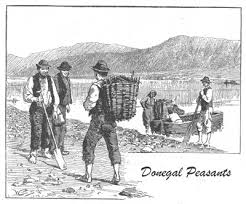
Now that raw materials (at least in terms of media) are becoming valueless, and workers are in oversupply, we're moving back towards that feudalism. If raw materials for media still cost anything, some of that value might trickle back to the workers who are actually making it. But as it is, media is all over the place, and only distributors can make any money off of it. The consolidation of media is taking the place of land ownership, and the micro-payment is the deflationary liquidity by which it is valued. People might pay for some media, but the media with any actual value is the media that is circled tightly around already valuable media. Those with the ability to consolidate many micro-payments are actually making money, while the vast majority of people are working for pennies digging around in the mud compared to those with the distribution networks under their control.

Just because someone can flip you a nickel for doing your media dance does not mean that they aren't going to flip most of their nickels to the naked-on-demand-HD-video-constantly-updated-dance-network. I think there is a belief that because micro-payments are "micro", they will somehow spin straw into gold for the little guy. If anything, by INCREASING the value of money at smaller increments (making these sums liquid to those who can collect on the large scale) they will hurt people trading on small scales, because their fewer transactions will earn them less money. If a penny was all of a sudden the value of a $1 mil., you wouldn't be rich by reaching into the "take a penny" bin. The convenience store would be rich for having 17 cents just sitting on their counter that someone gave them for nothing. It's a type of transactional deflation. Think of it: YouTube starts charging a penny a video watch. At roughly a billion views a day, they make $10 mil. a day. Now, you try charging a dollar per view for your own video. You might have made $10 a day from your 10 video views, except that all those viewers are now going to YouTube for a 99% discount. If you charge the same as YouTube, you are clearing 10 cents, while YouTube is making 10 mil. You might as well make nothing. Micro-payments support capitalists, because it makes consolidation profitable.

We're led to believe that because ANYONE can collect micro-payments, ANYONE can collect a lot of micro-payments. But there is no evidence to support this belief. It is the dream of a minor merchant, hoping to be a lord.

Say you are a photographer, or a writer, or a musician. You produce your media and put it online. You put up a micro-payment system. Maybe you collect enough to keep doing it, to pay for hosting and tech fees. Maybe you even make a bit more, and have enough left over to micro-pay tips to your friends who are doing the same thing. You're basically operating at a digital barter-economy level.

But then, you hit it big. BoingBoing drops your link, the constant unfolding of which is driving they're own "micro-payment" of ad payments per view. Your micropayments sky-rocket. You have surplus wealth. What do you do with it? Distribute it to your friends? Or start your own podcast? Hire some staff writers for your blog? Set up digital-franchises?

Next thing you know, you're being bought out by Gawker Media. You're an editor now, a curator of content. You siphon your friends' media through your big micro-payment mainstream-blog farm, telling yourself its okay you're not paying them, because they each are getting trickle-down micro-payments from your powerful link distribution system. You make or break entertainers, using them to feed the network of links, each one generating a fraction of a cent, with you at the hub. You are the landlord now. How does it feel? Drink the milkshake. Drink it up.

The micro-payment theory of the Internet combines this feudalistic consolidation with a Manifest Destiny view of the infinite characteristic of markets. We could all achieve payment, and make a living, if there were an infinite amount of media consumers, with an infinite amount of nickels to give us. There are a lot of consumers, but they are not infinite. This is a gold rush, a New World. Most of us homesteaders are just going to end up moving back to the city, and working in the factory. None of us are going to strike it rich with micro-payments. The only people who will, will be those in control of the distribution. The big mine owners. Those who can set up the shipping companies. Those selling us the tickets to California. But while the cost of media's raw materials has evaporated, the influx of capital is the same as it ever was. The market is still a market, no matter how small.

So what do micro-payments do for you? Nothing, except re-orient the market so that your work is less valuable, and that those who are already making money can make more. But then again, to some people who are underwater on their mortgages, signing a share-cropping agreement with the bank might seem like a good deal. Or moving back in with mom and dad. Or, you know, like crawling back into the womb.

But, creative media has an advantage over capital. Creativity does not require investment to exist. The economies of entertainment, literature consumption, and media production do not strictly need cash investment--they need mental, attention investment. This is another marketplace that has a different sort of power. There are those who would horde attention as well--but luckily, the human's capacity to supply attention well over-fulfills the demand, and so the consolidation of attention is not as strong as the consolidation of capital. The demand for capital seems pretty near limitless. Maybe by playing this market over the capitalist markets that tend towards exploitation of distribution, we can organize. Attention is the seed of organization, after all--the same process, but different market. Someone is going to control the productive market--will it be those who can consolidate the capital, or those who can organize the attention?

Take away:

A) the myth of micro-payments lie in the idea that they improve market standing for the little guy by increasing "free" to "pure profit" in the digital arena.

B) this is a myth, because micro-payments actually constitute market deflation by consolidating value around pre-existing value mechanisms of distribution and market control.

C) micro-payments, in a void of other material costs (that might trickle back to the actual producers), represent a new feudalism by making cumulative value in distribution the only source of value, and thereby awarding real value only to those who already control value.

D) We're tempted, as always, to participate in the game by a distortion of the way the market actually works, and accordingly, the promise of advance from the bottom up.

E) The good news is that digital media doesn't need capital at all. And attention might be a trumping market.

5/12/2010

CPSC Micro-fiction #2


CPSC Notices 5/12/10

Rome Snowboards Recalls Bindings Due to Fall Hazard - The snowboard binding’s base plate can break at cold temperatures, posing a fall hazard to snowboarders. The firm has received 14 reports of base plates breaking. No injuries have been reported.

Remote-Controlled Helicopters Recalled by Imagine Nation Books Due to Fire and Burn Hazards - The rechargeable battery inside the helicopters can overheat, igniting the helicopter and posing fire and burn hazards to consumers. The firm has received 49 reports of the helicopters overheating, including six reports of flames coming from the helicopters, and one report of minor property damage. No injuries have been reported.

Microfiction 5/12/10

No one would die today. The small helicopter fell out of the sky, in flames. The controls dropped from my hands, and I did not see them land. I flew into the air, as my broken snowboard bindings caught upon the white blanket of snow. I heard a snap, and felt my feet begin to move separately from each other. The helicopter began to fly erratically, not responding to my commands. I sailed down the hill faster, eyes in the sky, watching the helicopter attain its target. The wind picked up as I took off from behind the tree where I waited. I launched the helicopter on its mission, sailing through the air silently, it's deadly package hanging below it. I put down the binoculars, knowing it was time. I looked at the men on the trucks, unaware I was stalking them from up the hill. I pulled the binoculars and the controls to the bomb from my white parka, two black objects against a pure white hillside. I would have to follow the bomb down the hill to stay in range. I had been practicing my snowboarding technique for weeks, preparing for this attack. I took a deep breath, and steeled myself for what I was about to do.

(I forgot to mention that the criteria I'm using for the micro-fiction is less than 250 words. If this gets boring, I might decrease it to 99 words, which for me anyway, is much more of a challenge.

CPSC Micro-fiction #1


CPSC Notices 5/10/12

A) Claire's Recalls Children's Metal Charm Bracelets Due to High Levels of Cadmium

B) The U.S. Consumer Product Safety Commission (CPSC) announced today that the Virginia Graeme Baker Pool and Spa Safety Act's (P&SSAct) State Grant program is now accepting applications for funding from eligible states. The P&SSAct intends to enhance the safety of pools and spas by reducing child drownings and suction entrapment incidents and educating the public on the importance of safety devices and constant supervision of children in and around water. CPSC is the lead agency in implementing and enforcing the Act, which was signed into law in December 2007.


Micro-fiction 5/10/12

I found the letters, each a different shape, just lines really, all bent together. I drew them for father and he thought they were pretty. "You say they spell words?" I showed him how. He went down into his shop and he got out the metals--he melted and smelted and poured and pounded. Then he asked me again to draw the shapes. I did, and he slowly etched them into metal, one each on the clasps, twenty-two in all, and then fastened them into a band. He slipped it around my wrist. "Now you'll always have them with you."
I showed them Europa, and she thought they were neat. We went out by the pool to play while father took a nap. We tossed the bracelet back and forth, so light, so shiny. My letters flew back and forth between us as we sang. I threw them up high, and Europa missed. We could see them sink down below, in the clear water. "I'll get them for you," she said quickly, and dove in the water. I saw her go down. But she never came back up. Neither did the letters. I've forgotten Europa's little face. I still remember the letters though.

Microfiction and Product Death

I have a lot of literary balls in the air right now, so it's time to start committing a few to the Internet, to get them out of the way.

I've been thinking a lot about micro-fiction recently. At first I was against the idea of some sort of gimmicky constraint on the fiction-writing process. But then, after I tried writing a bit of micro-fiction, my perspective changed. The process by which one writes micro-fiction is different than simply writing. The space constraint means that each sentence must be packed full of meaning, taking the reader somewhere very purposefully. Adjectives are deleted, as is repetition. Sentence structure is made as minimal as possible, very efficient. You start discovering ways to hack the grammar, to say more with less. What subjects and objects can be dropped completely? When would simply a verb suffice as a sentence on its own?

A thing I always look at, in any sort of literature, is the assemblage of the writing. Sure, you've written something enjoyable of a certain length, it's a novel. But what does this novel attempt to do? Does it have a goal? Why or why not? What goals should writing have, if not just informative depiction, or entertainment? If it is less than a novel, what is it, and why? With micro-fiction, often the goal is a joke or a riddle. You let on only enough information for the reader to discover the "catch" by the time they get to the last line. Hemingway's "six word story" is one of these (and often the classic example of micro-fiction). The goal of that story is that you "get it", but only at the very end. The Joke formation is a classic trope-goal of human literature. It is like a vector model of motion: you move in one direction, and then another vector sends you in another direction. You thought you got it, but the punch line makes it mean something different, and NOW you "get it". There's nothing wrong with this; except, maybe that it is all do easy to use this as the "goal" when you have only a few words to use.

What else can micro-fiction do? What is worth saying in just a few words?

If you follow my Twitter feed, you might have noticed I have a certain preoccupation with the Consumer Product Safety Commission's product recalls. I follow their RSS feed (which is available through the link) with great interest. The interest is macabre--not quite dark, perverted, or Modernist enough to be considered Ballardian, but still there is something quite bizarre about the physical dangers of every day consumer objects. It's kind of like an infomercial coupled with a death announcement. Sharp blades, hazardous chemicals, high voltages, extreme temperatures, pinch and choke points, and deadly stored inertial energy are around us all day long, but normally sealed within lovely consumer design, like a butler with a pistol. The CPSC does fantastic work. We may think to mock the safety-conscious "nerds" who test every day products for any conceivable danger, but the days of caveat emptor have been replaced by strong protections against the profit-seekers. Most recalls come from these elaborate safety laboratories, protecting us from the danger we need never know. And yet, if you search the CPSC's public records, you will find that several product recalls a year do not occur without registered deaths and serious injury being attributed to faulty design, materials, and construction.

A consumer device--something so innocuous and common-place--can also be the symbol of any person's particular death drive. The death we seek out, and pay for, in the form of convenience and good design. Death lurks under all of our desires, the entropy at the end of the joke that is our lives.

Perhaps micro-fiction and consumer-hazard were meant to be together. The short, consumable package, the encased, enclosed, economically-packaged power--and the end result, the final toll, the end of the story. Maybe together, they can find a meaning for each other.

I'm going to write a micro-fiction story inspired by each day's worth of CPSC recalls, and publish them here (amid my other blog rambling). Not every CPSC recall is interesting, and they may not come out every day. Not every story I write will be interesting, either. But at least they will be short and easily consumable. And in some of them, we may just find the product we've been searching for. I'll continue the experiment until I recall it, or until it's made obsolete.

5/09/2010

Gnarl

All over the world, mathematicians roam beaches the length of which are infinite....

This means that unless there are an infinite number of mathematicians, each mathematician has an infinite length of coastline to roam.

5/04/2010

Users Program Their Own Functionality

Early morning coffee thought:

Perhaps the next big thing ought (dangerous word, that) to be customization of software.

I already wrote a bit about how our interfaces, the means by which we access our data, are tailored to an unreasonable expectation of "the common user", rather than our actual needs or uses of that software.

Think of this as the death of software humanism.

Consider: how much did you pay for the software (I know "app" is "in" now, but indulge my anachronism) that you use the most? $500? (fancy processing suite) $50? (video game) $5? (phone app) $0? (media player)

Your investment ranged from a lot, to nothing. Now: how much would you pay to fix "that one thing you can't stand" about the program? Or, to add that "one feature you really really want?" You might add another $50 to your $500 investment? Or you might pay $2 for something you downloaded free?

Somewhere, the sound of a cash register is waking up a capitalist.

Think about it. Most users probably uses 10% to 50% of the functionality of a given application. Why are they paying for the entire program? Why are the advanced users paying for the support of all the features for users who won't use them? What features are popular, and what features are useful? What new features would engender the need for further features? What features lead users into bad use habits, than then engender the need for new features they never needed to begin with?

The development of software is sadly, a simple timeline. Why is version 10.4.2.1 just another succession? Why aren't there versions 10.4.2.A and 10.4.2.B? The use of the software is actually being limited by its development. Sure, there are support costs, but think how many different version of a software are in use simply because people don't update. M had iTunes 6 until I made her update recently. People are using old versions of software because they don't want to keep track of new releases, and therefore missing out on bug fixes that would improve their use. So there already are multiple versions out there, but the feature set ranges from "crappy" to "less crappy". M didn't update, because she didn't need all the advanced features, like Genius, etc. Okay. So give her the paired down version. If she was using software with only features she liked and wanted, maybe she would be more invested in bug fixes.

Right now, only a few really interested users keep track of new releases. The rest of people click "ok to update" by accident. But if people were given the option to define the sort of program they used, and to control what it could do, they would probably opt for simplicity they could understand. And beginning here, they could expand their use of the software. Once the basic level is mastered, they could experiment with new features.

Of course, the worry is that this will lead to a full menu of options that people don't understand, like the Windows 7 release prelude. What's the difference between Home Professional and Amateur Office Complete Suite? And what about a hundred different paywalls, blocking your ease of mastering the software as it asks you for $5 per new menu you'd like to explore?

The key is not just to nickel and dime software users, anymore than to treat them like an undifferentiated mass. Software use has aspects of a market in it. It is a machine that thrives on masses. iTunes would never have become one of the biggest media player options, if it wasn't free. Many phone apps wouldn't make money at all if the "lite" version wasn't reduced in price. There's a lot of software, like WinRAR, and other utilities, of which only a few people are willing to buy the full version, and the rest are fine to get along with the shareware version. The reason that it is apparently "impossible to sell media" on the web, is that the machinic-masses of the files and the users, combined with the technology, have made this the conditions in which the technology is used. mp3s have gravitated towards nearly free. Adobe Suite has gravitated towards $1,000,000. This is the way software is used, and the way it defines the cost.

Now, the idea is to take the fluid variables beyond the shifting of cost, supply, and demand. Everyone knows this machine is fluid, and always shifting, trying to find its balance. Why is the functionality of software not seen as a similar machine, an interface of people, technology, semiotics, and data, that would benefit from the flexibility of being treated like a dynamic machine?

And of course, it acts like a dynamic machine already. The concept of shareware made its own popularity. Firefox has a large number of add-ons, treating functionality as apps. The concept of an app itself, a program and interface good for one specific task, is a step in this direction. We need to let functionality define itself. We need to let the users program the signs of the interface.

Next up: literature. I will totally re-write the my short story to end the way you want it to. $5 upgrade.

5/01/2010

Slug Sex

Yeah, I know, Slug Sex sounds really great.

But it is amazingly sensual. (And I've always hated slugs.) It's like a sweet, sweet, Cronenberg love scene. Hemaphroditic invertebrates defying gravity in a twisting band of hormonal tension, encased in blossoming bands of mating mucus, while their sexual organs swell to encompass their entire bodies, in an act of throbbing, mutual insemination, the ultimate gestalt of sexual being.

Stars divide. The air burns. Rockets fly. Little slugs are made.

Trust me. Just watch it.


If nothing else, the mellifluous vocal tones of David Attenborough should sooth your humors.

4/28/2010

Wikipedia Eater

Thanks to stimulation sparked by my favorite new Twitterer, @exoplanetology, I just went on a lovely little wikipedia tour. Allow me to curate for you:

Dyson Bubbles on NextBigFuture:

Speculative physics insanity

Unlike the Dyson swarm, the constructs making it up are not in orbit around the star, but would be statites—satellites suspended by use of enormous light sails using radiation pressure to counteract the star's pull of gravity. Such constructs would not be in danger of collision or of eclipsing one another; they would be totally stationary with regard to the star, and independent of one another. As the ratio of radiation pressure and the force of gravity from a star are constant regardless of the distance (provided the statite has an unobstructed line-of-sight to the surface of its star), such statites could also vary their distance from their central star.


Dyson Spheres (Wikipedia):

The star eater

A Dyson sphere is a hypothetical megastructure originally described by Freeman Dyson. Such a "sphere" would be a system of orbiting solar power satellites meant to completely encompass a star and capture most or all of its energy output. Dyson speculated that such structures would be the logical consequence of the long-term survival and escalating energy needs of a technological civilization, and proposed that searching for evidence of the existence of such structures might lead to the detection of advanced intelligent extraterrestrial life.
Since then, other variant designs involving building an artificial structure — or a series of structures — to encompass a star have been proposed in exploratory engineering or described in science fiction under the name "Dyson sphere". These later proposals have not been limited to solar power stations — many involve habitation or industrial elements. Most fictional depictions describe a solid shell of matter enclosing a star, which is considered the least plausible variant of the idea.


The Penrose Process (Wikipedia):

basically a centripedal brake for a black hole. Made out of light.

The Penrose process (also called Penrose mechanism) is a process theorised by Roger Penrose wherein energy can be extracted from a rotating black hole. That extraction is made possible by the existence of a region of the Kerr spacetime called the ergoregion, a region in which a particle is necessarily propelled in locomotive concurrence with the rotating spacetime. In the process, a lump of matter enters into the ergoregion of the black hole, and once it enters the ergoregion, is split into two. The momentum of the two pieces of matter can be arranged so that one piece escapes to infinity, whilst the other falls past the outer event horizon into the hole. The escaping piece of matter can possibly have greater mass-energy than the original infalling piece of matter. In summary, the process results in a decrease in the angular momentum of the black hole, and that reduction corresponds to a transference of energy whereby the momentum lost is converted to energy extracted.


Kardashev Scale (wikipedia):

Soviets tended to think big.

The Kardashev scale is a method of measuring a civilization's level of technological advancement. The scale is only theoretical and in terms of an actual civilization highly speculative; however, it puts energy consumption of an entire civilization in a cosmic perspective. It was first proposed in 1964 by the Soviet Russian astronomer Nikolai Kardashev. The scale has three designated categories called Type I, II, and III. These are based on the amount of usable energy a civilization has at its disposal, and the degree of space colonization. In general terms, a Type I civilization has achieved mastery of the resources of its home planet, Type II of its solar system, and Type III of its galaxy.


Malthusian Catastrophe (Wikipedia):

peak metabolism.

A Malthusian catastrophe (also called a Malthusian check, crisis, disaster, or nightmare) was originally foreseen to be a forced return to subsistence-level conditions once population growth had outpaced agricultural production. Later formulations consider economic growth limits as well. The term is also commonly used in discussions of oil depletion.
Based on the work of political economist Thomas Malthus (1766–1834), theories of Malthusian catastrophe are very similar to the Iron Law of Wages. The main difference is that the Malthusian theories predict what will happen over several generations or centuries, whereas the Iron Law of Wages predicts what will happen in a matter of years and decades.


The Omega Point (wikipedia):

WHAT!?!?

The Omega Point is a term used by Tulane University professor of physics and mathematics Frank J. Tipler to describe what he maintains is a physically-necessary cosmological state in the far future of the universe. According to his Omega Point Theory, as the universe comes to an end at a singularity in a particular form of the Big Crunch, the computational capacity of the universe (in terms of both its processor speed and memory storage) increases unlimitedly with a hyperbolic growth rate as the radius of the universe goes to zero, allowing an infinite number of bits to be processed and stored before the end of spacetime. Via this supertask, a simulation run on this universal computer can thereby continue forever in its own terms (i.e., in "experiential time"), even though the universe lasts only a finite amount of proper time. Tipler states this theory requires that the current known laws of physics are true descriptions of reality, which he says implies that there be intelligent civilizations in existence at the appropriate time in order to force the collapse of the universe and then manipulate its collapse so that the computational capacity of the universe can diverge to infinity.
Tipler identifies this final singularity and its state of infinite informational capacity with God. The implication of this theory for present-day humans is that this ultimate cosmic computer will be able to run computer emulations which are perfectly accurate down to the quantum level of all intelligent life which has ever lived, by recreating simulations of all possible quantum brain states within the emulation. This would manifest as a simulated reality. From the perspective of the recreated inhabitant, the states near the Omega Point would represent their resurrection in an infinite-duration afterlife, which could take any imaginable form due to its virtual nature.
Assuming that achieving the Omega Point is physically possible, Tipler says this would be accomplished by "downloaded" human consciousness on quantum computers in tiny starships that could exponentially explore space, many times faster than biological human beings. Tipler argues that the incredible expense of keeping humans alive in space implies that flesh-and-blood humans will never personally travel to other stars. Instead, highly efficient uploads of human minds ("mind children" as Tipler calls them, they being the mental uploads of our descendants, or of ourselves[1]) and artificial intelligences will spread civilization throughout space. According to Tipler, this should likely start before 2100. Small spaceships under heavy acceleration up to relativistic speeds could then reach nearby stars in less than a decade. In one million years, these intelligent von Neumann probes would have completely colonized the Milky Way galaxy. In 100 million years, the Virgo Supercluster would be colonized. From that point on, the entire visible universe would be engulfed by these "mind children" as it approaches the point of maximum expansion. Per this cosmological model, the final singularity of the Omega Point itself will be reached between 1018 and 1019 years.


Freak out.

So I was thinking, about the time I got to the article about the Omega Point, that maybe with the cancellation of the human space program, we are reaching a turning point. If, for some reason, society does not completely collapse, perhaps this will be the high-water mark for humanity conquering the stars. Maybe we'll look at this period as the time when we wised up, and stopped sending fragile corpses up into radiated space wrapped in tin foil, just as now we look back at when we used to send men miles under the ground to dig up coal at great expense and many lost lives. Oh... wait a minute.

But seriously, I'm not saying people will never go into space again. Earth orbit is the next area just PRIMED for gentrification. A few starbucks, a couple of leash-free dog park satellites, and we could totally start Facebook groups to complain about the lack of magnet schools at the Lagrangian points. But space exploration? Why bother? What is an astronaut going to do on Jupiter? Sweat in canned air while s/he watches a flag disintegrate under the gravity?

But heck, we're using data-linked robots to bomb people in Central Asia, so why wouldn't we use robots to terraform Titan, and settle for the digital postcard?

"Because it is there?" Maybe space will be solely the rich person's pursuit. They'll spend years and millions of dollars training to go walk on asteroids and lesser-known moons. Then, fifty years later, after they make it back to earth, they can talk about the multi-solar eclipses in the portion of the asteroid belt now named after them with tears in their eyes, while they have a cocktail at the Explorer's Club. Meanwhile, the rest of us will be crowd-mapping Plutonian mineral deposits via our HD, 3D displays from our compounds here on good old earth, for an inflation-equivalent 30 cents an hour.

I am not nearly the impressive nerd-knowledge zone that Exoplanetology or NextBigFuture is, but it seems pretty clear to me that once you surmount the problem of earth's initial gravity and atmosphere, slinging a few thousand camera-equipped smart phones into the galaxy is way easier than trying to ship a human there. At least until we get gravitational drives, or spin-dizzies, or something else I haven't read about on Wikipedia yet. But there's an awful lot of pre-stage Kardashev 1 left before we get there.

More seriously (actually the serious part): I do think we are primed for a lot of new speculative thinking about the future of space exploration. Now that the human narrative has been derailed, it's the perfect time to start thinking fresh.

In the meantime, as I said earlier, I'm into fusion power for the helium exhaust. Here's to sending massive structures into the air, only to have them come back down again.

4/21/2010

Against Theory, For Machines

I wrote this yesterday:

Rather than come up with an overall "theory" of this clip, I just want to draw your attention to some elements. I've been working on a theory of criticism lately, of various narrative arts, that instead of trying to apply an overall "theorem" to the piece or genre or form, instead finds various machinations of how any such theory will work. I'll go into this later when I have my ideas more solidified, but for now, let's leave at this: if you were to approach a complicated machine like a car, you might not try and explain "how the car works", but instead pick out some unique and emblematic parts of the car, and explain how those work. You might explain a wheel and axle, or a disc brake, or a 4-stroke combustion engine. These are all parts of how the car works, but do not attempt to explain it in totality, which would necessitate various economic theories of production, design theory, raw materials processing, social forces in transportation, and on and on. Nothing works independently of anything else. But to learn anything, we have to start taking things apart. And you start taking apart most things by unscrewing some bolts, and unplugging a few wires, looking carefully while you do so.


I was reminded of this again when I started to pick apart Kazys Varnelis' essay on history, temporality, and modernism.

I have this pet peeve about cultural studies (not that the essay is cultural studies, but you'll see where I'm going). I appreciate the work of cultural studies, of not throwing away anything in the pursuit of evidence about what exactly we, as a culture, might be up to, philosophically, historically, anthropologically, and so on. But it leads to a all too common problem; the theorist, in the effort to present as much evidence as possible and still tie it all together, is forced to wash over certain pieces, or many pieces, in the effort not to spiral out into a Arcades Project style work. Rather than, say, returning to the car example, "let's start by talking about how a combustion engine works"--starting with a particular instance of the material--they begin with a general conclusion: "a car works by burning fossil fuels and creating CO2." Which is true, of course, and important. But while it is culturally important information about a car, the statement is not promoting any understanding about how a car works, or more importantly, how we might fix the negative effect described.

Back in my (more) headstrong youth, I had an unfortunate run-in with a cultural studies professor, in which I said that her work, which collected examples from pop culture that "caused young women to have a poor body image" was obvious, and superfluous. Clearly some women have a poor body image, and naturally, some elements of pop culture are related. But the research said nothing about the link, the mechanism, or which women might be affected, and to what degree. It presented the same statement about the car and CO2. It presented a generalized conclusion about media and body image, by merely identifying some evidence that were probably the cause, and some evidence that were probably the effect.

Although I feel badly about acting like such a jerk about it, I still think the criticism is relevant. It is really easy for a reader already harboring the preconceived idea of A -> B to fall into the trap of spending time reading theory that is essentially tautological, or at the very least, generalizes conclusions rather than studying the mechanism. The mechanics of our theory is the basis of being about to do anything about it. Anything else is pure mythos, a nice story that makes us feel better about the way things are without intentionally affecting them. Successful theory, or stories for that matter, change the way we think about things, at the very least presenting an angle for cross-reference of our experience and perceptions. Rather than simply be a jerk (which like generalizing, is more than easy enough) I now hope to draw out at least a few mechanisms when I encounter something perhaps leaning towards the urge to generalize. Show someone how to change the oil filter maybe, or point out a coolant leak. Have a few beers and discuss the pros and cons of alternate fuel sources. That sort of thing.

I actually don't know a lot about all the details of cars. But I know a little bit about metaphysics, and psychoanalysis, so this is where my explanations of epistemological mechanisms often comes from. (One day, I'll write a metaphysical Chilton's guide to the unconscious. The Ego and the Id, but with better diagrams updated for the current models.)

Everything that I'd want to add, as diagrams of metaphysical mechanisms, to Varnelis' essays, I've actually already written, in a long drawn-out annotation of Heidegger's Section 73 of Being and Time: "The Vulgar Understanding of History and the Occurence of Dasein." Which you should dig through by all means, if you are some kind of meta-structural engineer with a taste for blog writing.

But what I really want to get at is the metaphysical distinction between temporality in Heidegger's notion of the "world-historical", and temporality in his notion as the "temporality of being". In one sense (I know what I just said about generalizing, but this is a blog post first of all, and I can feel your attention waning, and I'm trying to meet those unacquainted with Heidegger halfway) this is the difference between the past and the present. The element of the past in things is its connection to a world of the past, a certain time that is not this time. Whereas, our sense of "now", our connectedness between our consciousness and the things we are conscious of, is part of Dasein, or authentic being. Heidegger is so firm on separating these two notions of temporality that he calls the former "secondary historicity" and the latter "primary historicity", a clear privilege of being over objects.

The reason I'm so interested in psychoanalysis, is that despite anything you may feel about the pros and cons of the clinical method, it is one of the most compelling attempts at theorizing the mechanics of the brain, from a metaphysical perspective. In other words, while neuroscience is the best at theorizing the mechanics of the brain from a chemical perspective, psychoanalysis excels at finding the roots of philosophical issues in our heads. Where does the notion of space and time exist in the function of the brain? Well, there are areas of the brain that affect our conception of time and space. But what is the metaphysical relationship between time and space, such as existing inside the chemistry of the brain? What, in other words, is time, and what is space, such as they exist in the brain? It is a phenomenal reduction: a reduction of metaphysics to the metaphysical, that which can be affected and studied in the means through which we perceive it. Neuroscience is a chemical reduction: a reduction of consciousness to what can be affected and studied by chemistry. Very few studies have taken place that combine these two. What would happen if we asked a renowned metaphysician to review his/her theories while certain areas of his brain were stimulated with electricity? Drug users are probably the closest to this concept, ironically. By taking unscientific risks, and by describing the world in humanistic generalities (read: new agey hippie nonsense) they are re-theorizing the world as they re-organize their brain chemistry. Maybe the Third Eye is more philosophically and scientifically relevant than the credit we give it. But that's another tangent, another part of the car.

But as far as temporality goes, what Heidegger distinguishes as "primary historicity" or Being, in my opinion, deserves no more authenticity than "secondary historicity", or world-history. Being, our conscious knowledge of the present, and "nowness", is no different than our appreciation of the historical value of objects.

The best example is a historical artifact. An electron tube is an artifact--no longer current technology, it has since been replaced by newer objects. But it still acts as an electrical component, despite its apparent "age". An even better example is an arrowhead. When I was a kid, I found any number of rocks, which I was sure were "actually arrowheads". When does the rock stop being a rock, and become an arrowhead? In my six-year old mind. We ascribe value to objects, label them with significance, based on a large network of semiotic structures in our mind. The "age" of the object is actually, not relevant. It exists only simultaneously with its current presence, and its current significance.

But there is an lingering element of "authenticity", Heidegger's privilege, given to certain objects within their semiotic language. An amplifier built with tubes is more "authentic". This is the meaning of its "age" to us. My arrowheads were more important than other rocks because of what my six-year old mind believed them to be. The authentic form of temporality Heidegger identified is no more than the most significant signifier in our language of time--Being, the present. The zero of the number line, point from which duration stretches, the ego as the surface of the consciousness, the Signifier, the body without organs, a unified monad, to which everything else must attach itself if it is to be meaningful.

The concepts I just referenced as the authentic point of signification all share a characteristic: they don't really exist. They are formed from their sub-infrastructural elements. They are the architecture, the perceived significant art, the "pure" expanse of color formed via the absorption of visible radiation, the "blank" wall, made from conglomerated minerals. They are the simplification, the generalization, the "I" in the ecology of consciousness, The "Mother Nature" in the chemical dynamics of biology. The vast field of significations of time and temporality only seem to come to a head in our sense of "now", when really the writing stretches all across and through the wall, and on any visible surface, and in any perceivable sound, in the outlines of any recognizable shape, and it the infinite extensions of any cognizable dimension.

Which is a lot of different places, both "real" and "not". It's a whole lot to make sense of, and a lot to form into any unified theory of consciousness, time, space, epistemology, philosophy, physics, or for goodness sakes, the Internet. But this is a place to start.

A car was not built from the driver's seat.

But luckily, we don't need to build a car to be able to drive one. What I want to say about Varnelis' essay is that there seems to be a bit of confusion, some back and forth between epochs of the "world-historical" and implementations of "temporal being". Even Heidegger seemed a bit confused by the distinction, and naturally so: in the modernist age, it would have been very difficult for anyone to reject the overwhelming authority of the "I", of the deep-rooted primary temporality of consciousness. Lacan capitalized the Signifier with reason. Back then, you better believe it was a proper noun.

But here's the thing about temporality, and accordingly, atemporality--the lack of importance of the primary historicity in current society is, actually, its own proof that it was never really so primary. How does a word get purged from a langauge? Everyone simply stops using it, without realizing that they don't use it anymore. The tip of an iceberg may not tell you anything about the shape of the ice underneath, but if you don't see the tip of an iceberg, then there's nothing underneath.

We are becoming predominantly fluid in our conception of the world-historical. Network culture, etc. Meanwhile, we are relying on temporal-Being less and less to define the world-historical. Have you noticed that April Fool's jokes thrive on the Internet? It's because Reality, the plane upon which a joke rests, is all warped on the Internet already. April Fool's jokes are proliferating, because our concept of world-history is now based on Wikipedia. Irony, trickery, double-meaning, and the good old nudge of the elbow are insinuating themselves into our concept of Truth. We roll with the punches, and nod along with the joke, because not even the serious is serious anymore. And yet, we still get things done.

So, the legacy of "ends of history" are not really important anymore. Any theory needing to call itself post-____ is not really relevant, either as a positive or negative example, because it is still naming itself "I" based on an authority of a temporal relationship. We don't need this evidence of increasing meaninglessness of historical narratives. We get the sense that we've already seen this episode, or at least maybe the episode this is a remake of. You don't need to be able to read a watch to know that it is stopped. You can hear the absence of ticking.

I always thought the the first sign of the end of grand narratives is that we'd look up and say, "Narratives? what are those? Is that like a riddle? Or a song?" When we say, "timeline? You mean like Twitter posts? Or youtube comments?" Then we'll know that causality is really over. Time will not be over just by theoretically "wanting" it, it will be over when you lost your watch, and you forgot to care.

This doesn't mean that there is nothing to do, or that we shouldn't bother talking about it until it's already happened. Because we are doing it, and we are talking about it. Just some of us more than others. We just need to stop theorizing connections, and just connect, which theory does, to a large extent. But where it really connects is not where it attempts to generalize about theory as a whole (though we are all guilty of this, either to a small or a large extent). It connects with Tab A going into Slot B, with the material production of new significations that replace the old connections. Let's go out there and find the atemporality. Let's find it in Marx, let's find it Galileo, let's find it in Irigaray, let's find it in cave paintings. Let's find it in places that aren't books, or the Internet. Let's bring these tools, these working parts back to the garage, set 'em up, and start actually using 'em to make stuff, not just put them on the shelf. Share 'em, too. Metaphysical tool library. When we are finding little parts of the "I" in all these supposedly "historical" things, and when we are using and moving back and forth across different epochs of time as easily as we perceive and express ourselves, then we will already be there.

4/20/2010

"Not here in the way we are"

"...to the human animal, that can take a wishful dream and give it a dimension of its own..." - Rod Serling


The Twilight Zone is masterful television, naturally. Not for pure originality, but because it encompasses so many of our speculative-fiction tropes into one format, namely, primetime television. The series was a Modern Brothers Grimm of the uncanny and the intriguely eerie.

In keeping with this particularly modern narrative role (is there anything that really says "Post-War Society" like the image of Rod Serling with a thin black tie and a cigarette in hand? File it next to Elvis' hips, and James Dean's car wreck.) most of the stories of the Twilight Zone revolve around psychological issues. Memory, personal appearance, perception, crises of the ego, and paranoia flow through these tales. And naturally, if we are discussing the modern human condition and its fissures and crevices, time is going to be one of the main characters, the lurking dark, waiting to finally show itself like a metaphysical Cthulu. The mocking trope of the series, "...in the end, it was really people," is somewhat of a distraction. Because it in the end, for all people, "it was time, all along."

"Time, time enough at last," is the horrifying conclusion of a particular character upon finally grasping, via the plot's journey, long after we have all discovered it, that all of humanity has been destroyed. Humanity, and humanism, is the story of the struggle against time, or the struggle with time, wrestling with its flow like swimming in the metaphorical river that "won't stay the same river twice". Remembering, forgetting, paranoia for the future, anxiety for the past, running from things, running to things, "before it's too late", "because it is too late."

In this particular clip I've featured at the beginning of this post, much of this comes to a head. I could tell you the back story, but the images are apparent enough. A woman, lamenting the still image on a wall, walks in a room distraught, and switches on a film projector. She immediately relaxes, and is caught in the scene. A second woman enters, and screams in panic. A man shows up, questions the second about the first's whereabouts, and then determined, switches on the projector. The missing woman is on the screen, in the film, addressing all the other "characters" as her friends. The man calls out to the screen, in a screen-within-a-screen shot, the hallmark of the modern film self-consciousness. Bizarrely, horrifically, the image responds, long enough to wave goodbye and disappear, as the reel runs out, and the image disappears. The man gets up to leave, and walking into the hallway, finds the missing woman's handkerchief, and we realize suddenly that the scene on the film was filmed in the hallway of the house in which they remain.

Wow. A lot to digest here.

Rather than come up with an overall "theory" of this clip, I just want to draw your attention to some elements. I've been working on a theory of criticism lately, of various narrative arts, that instead of trying to apply an overall "theorem" to the piece or genre or form, instead finds various machinations of how any such theory will work. I'll go into this later when I have my ideas more solidified, but for now, let's leave at this: if you were to approach a complicated machine like a car, you might not try and explain "how the car works", but instead pick out some unique and emblematic parts of the car, and explain how those work. You might explain a wheel and axle, or a disc brake, or a 4-stroke combustion engine. These are all parts of how the car works, but do not attempt to explain it in totality, which would necessitate various economic theories of production, design theory, raw materials processing, social forces in transportation, and on and on. Nothing works independently of anything else. But to learn anything, we have to start taking things apart. And you start taking apart most things by unscrewing some bolts, and unplugging a few wires, looking carefully while you do so.

So, like, look at THESE parts, man:

- Memory: memory is an attempt to re-live time, to rethink it, to put yourself back into a "mindset", to remember "how you felt" then. It is an attempt by consciousness to replay itself.

- Photography: still pictures are good, moving pictures better. Moving pictures are still pictures, played 24 frames per second, pulled across a lens, with a shutter to silence the perception of the film's motion, and instead create the illusory perception of time passing. The image moves, but the screen stays still. This might as well be the logic circuit of the spark plug timing computer in this clip. I refer you to electromagnetic physics, i.e. Deleuze's Cinema 1 & 2, and countless other works still trying to puzzle out on paper how film actually "works".

- The "Screen", or the substance of film: a white sheet, where "everything happens". The blank slate of consciousness of film. Screen's within a screen tell us "this is not actually happening; you are watching it." Translation: this is not actually happening; you are remembering it. The difference between neurosis and psychosis is that a neurotic can still tell the difference between fantasy and reality. However, sometimes psychotics are actually better off in terms of mental stability and happiness. Sometimes.

- Film vs. Video: What is real, and what is staged? The advent of video means the advent of "reality". Snap shots of motion, hence what's "real". Video has a living pulse. It is everpresent, in a way that film can't be. You cannot see video data. It can be erased, and re-recorded. Now it is digital, and exists without physical form. Film requires a theater, a screen. Video lives in the TV. Video is what the TV breathes, eats, shits, and fucks. Video works with the TV, in the TV, against you.


- Double exposure: What happens when a film is wound around the reel? Does it breath, in the way that videotape breathes on the shelf, desiring us to play them, to insert them like the cartridges they are? What happens to the woman in the clip? If the film is played back, will she appear again? Or is she a ghost, inhabiting the film, moving with an uncanny life apart from the captured individual frames? Or is she gone forever, the lingering moments on the end of the film her vanishing image, her shadow?

- Camera anxiety: I first discovered camera anxiety while watching The Man with the Movie Camera (clip below, another crazy earth-moving vehicle to be dissassembled). When watching a shot of a car or a train, I simply observe the car or the train. I am an innocent voyeur. When I see the shot with the camera man filming the car or train, I am suddenly aware, "those people are being filmed!" When it goes back to the original shot, I cannot shake the feeling. I am sitting with the camera man, and we are looking at the car and train. Anyone can see us, looking at them. It gets worse: in the second shot, I have a delirious realization: "there must be a second camera somewhere. Where is the second camera? Where is the camera that is filming us filming?" When do we see characters in film and video as ourselves? Are we better off or worse for knowing the difference?


Now back to your regularly scheduled phenomena.