Showing posts with label Capitalism. Show all posts

6/04/2010

Debt of Society

Everybody but everybody likes to freak out about the national debt. My liberal friends, conservatives who aren't my friends, my anarchist friends, my semi-apocalyptic cult friends. "OMG THE DEBT, something-something CHINA!" has been a popular discussion topic for awhile.

Naturally, a lot of this distrust of the debt is stemming from a distrust of LARGE, CENTRALIZED AUTHORITY, and our mutual fear of the ILLUMINATI. Which is, of course, something to fear, and I would never begrudge people to give up their healthy conspiracy theories (not an ironic statement at all... conspiracy theories are healthy. In science they call these 'new hypotheses').

But, all the same, these are people with credit cards, who use currency, and who have no problem owing someone a 10 spot or a favor.

Debt is a quantification of guilt, and important to all of our relationships. It is the placeholder for value. The ability to have an economy is to be able to exchange things not only through space, but through time. e.g. I will gladly pay you Tuesday for a hamburger today. Without the ability to "pay on Tuesday", there would be no sense of value, because exchange would be limited to what we currently have in our possession. Whether it is a household economy, a political economy, a sexual economy, or monetary policy.

But rather than go on about that, I'll just point you towards Nietzsche's Genealogy of Morality. There are very few "must read/watch/listen" items of culture in my estimation. But this should be required reading for the human race. Or at least those who claim to be educated. It's not the answers to the way the world works, but it is such a good push away from everything we think we know about the reasons we do things, you'll never look at the world the same way.

Instead, I just want to share a little fact of monetary data with you. To put things in perspective.

Here is some data on US debt, from The Financial Times' Alphaville blog. Though of course, this is data available to anyone. If they were curious.

At the end of 2009, the US gov't debt was $10.3 trillion. Whoa, right?

But at the end of 2009 the total of ALL US DEBT was $50.9 trillion. This means that gov't debt, while a seemingly huge figure, was only 20% of all US debt.

So where is the rest of the debt coming from? Well, from you, me, our liberal and conservative friends and non-friends, our anarchist and cult friends.

$2.2 trillion was from financial companies alone.

$13.9 trillion was household debt. That's right: our mortgages, credit cards, student loans, and whatever else is more debt that the combined state and federal deficit.

And the rest of it? The debt owned by businesses, large and small. Banks, stores, farms, gas stations, private schools, car companies, whatever.

Government debt, which fundamentally exists to not simply balance the budget, but to continue to provide the monetary policy support which makes US currency VALUABLE, is only 20% of all of US debt. The rest of the debt, is, as they say, the price of doing business. How would you get credit to buy raw materials for your business without a line of credit at the bank? How would you pay your bills on time if you didn't have a credit card? How would anybody invest in anything if they could only do it with the cash they had on hand?

The entire US economy, at $14.1 trillion dollars, is leveraged to the tune of 359%. The FT blog posting notes the interesting fact that only recently has American leveraging begun to shrink FOR THE FIRST TIME in the 50 year history of the recorded statistics, down to 345% percent.

Now, I'm not any sort of expert that could comment on what the optimal level of leveraging for the US economy. But, I can tell you that the Ron Paul types who think it is feasible that the government balance the budget every year are completely out of whack. This is not a matter of "belt-tightening" or "proper accounting" or reigning in "out-of-control spending". An American economy without any sort of rolling debt would be absolutely, fundamentally incongruous with the American economy we all know (and supposedly, love). The fact that US leveraging has been increasing for every year of the past fifty years shows that an increase in debt is part of the "growing economy" we consider the norm. The fact that only this year has leveraging decreased does not show that all of a sudden we have all "come to our senses" and decided to pay off our debt. It shows that there has been a sudden collapse of available credit, which we were using as the coal-snorting steam engine driving our so-called "prosperity". Otherwise, you can be sure we would have kept swiping that credit card. What changed? Did our consumer appetites diminish, so we were content with the amount of money we made last year? Did we strike gold somewhere, so that now we have enough "real capital" to assuage our need for debt? Or did our consumer society stumble, and a massive investment sector driving our economy's growth for the last nine years suddenly and cataclysmically collapse?

Currency is only as valuable as the indications and perception that it will be valuable in the future. Offering to pay debts in US dollars is one way of maintaining that value. Another way is by finding or producing an excess of capital. I don't see anybody spinning straw into gold.

We've been riding the wave of debt for fifty years. And still our schools and highways are falling apart. I'd like to say, along with everyone else, that this is unsustainable to continue with debt like this. Maybe increasing the debt forever is sustainable, maybe it's not. But if trailing the pack of currencies heading off to slow, inflationary infinity isn't sustainable, then that means that anything familiar, anything we would like to think of as economically positive, good in society, part of our American status quo, would also turn out to be not sustainable.

Of course, we friends of the anarchist persuasion have known this for a long time. You might say we're ready for it, and have been looking forward to capitalism and the credit market's collapse for some two hundred years now. The contradictions of debt and capital have been visible to some for a while now. There may always be some form of conscious debt, as the antithesis to value. But building an entire economy on currency, quantitative value and debt seemed a bit... reckless, maybe?

And the benefit of this history is that we've already thought ahead to a life without debt. Maybe in a utopian way, maybe in a primitive way, or maybe in a downright sci-fi way. But at least we've thought about it. We know it would be a major cultural shift, and there would be fundamental changes in a society without a debt-based economy, either good or ill, that would make it unrecognizable from the way it is now.

But those tacking Ron Paul signs next to the freeway and complaining about the deficit while in the car on the way to the mall, have not. They see the system of capitalism as a giant checkbook. It must be that straight-forward, and that logical, if it is the status quo, right? The debt, for them, is as much a matter of honor, as it is not paying taxes. Because capitalism, after all, is as simple as working hard and pursuing the American dream, is it not? You shop the bargains, while you raise your own prices to afford the remodel on the house. You get the good deal, while sticking it to the other guy. It's called profit. Profit makes itself, as long as you don't have to look at the debt that pays for it. We've built an entire culture founded on this concept.

You buy into the culture, you gotta pay the price.

5/13/2010

Micro-payment Feudalism

I'm about to propose that micro-payments are a system of capitalist exploitation, the scope and potential of which have not been seen since the days of feudalism.

Ready? Go.

The myth of micro-payments is that the little guy can make money off of what was free, by charging only a small amount for it. Because these payments are in the digital arena, there are basically no raw materials costs, and therefore any payment whatsoever is pure profit.

This is the dream of capitalism: a reduction of labor costs to zero, so that any amount charged is complete surplus value. A money making machine.

But what this forgets is the system of distribution. The system of distribution is fundamental to a market--in fact, it is the oft forgotten twin sibling of production. You cannot sell anything you produce unless it gets to those willing to pay, and so any value of your product is as dependent upon distribution as production.

The market of the Internet is of a feudal land market.

With land as the only material form of wealth, those with land will consolidate their land, using their land to increase the value of their land. In a feudal society, the land is the resource from which anyone lives. Of course, a square mile of land can support more than the people who live on it (i.e. relatively few users per mile) so an ownership class can develop, who are not working the land, but simply owning and coordinating it, providing limited access to their serfs in exchange for the surplus produce.

This changed with the industrial revolution, when a working class could be established that would further the owner-class' capital (value now dissociated from the land) by being paid, as long as profits were still collected. When value was pulled away from the land, and became "materials" or "labor" or "market share", capitalism was invented, because anyone could profit anywhere, as long as they found a way to charge a markup. Anyone could profit, except those working with their hands, of course.

Now that raw materials (at least in terms of media) are becoming valueless, and workers are in oversupply, we're moving back towards that feudalism. If raw materials for media still cost anything, some of that value might trickle back to the workers who are actually making it. But as it is, media is all over the place, and only distributors can make any money off of it. The consolidation of media is taking the place of land ownership, and the micro-payment is the deflationary liquidity by which it is valued. People might pay for some media, but the media with any actual value is the media that is circled tightly around already valuable media. Those with the ability to consolidate many micro-payments are actually making money, while the vast majority of people are working for pennies digging around in the mud compared to those with the distribution networks under their control.

Just because someone can flip you a nickel for doing your media dance does not mean that they aren't going to flip most of their nickels to the naked-on-demand-HD-video-constantly-updated-dance-network. I think there is a belief that because micro-payments are "micro", they will somehow spin straw into gold for the little guy. If anything, by INCREASING the value of money at smaller increments (making these sums liquid to those who can collect on the large scale) they will hurt people trading on small scales, because their fewer transactions will earn them less money. If a penny was all of a sudden the value of a $1 mil., you wouldn't be rich by reaching into the "take a penny" bin. The convenience store would be rich for having 17 cents just sitting on their counter that someone gave them for nothing. It's a type of transactional deflation. Think of it: YouTube starts charging a penny a video watch. At roughly a billion views a day, they make $10 mil. a day. Now, you try charging a dollar per view for your own video. You might have made $10 a day from your 10 video views, except that all those viewers are now going to YouTube for a 99% discount. If you charge the same as YouTube, you are clearing 10 cents, while YouTube is making 10 mil. You might as well make nothing. Micro-payments support capitalists, because it makes consolidation profitable.

We're led to believe that because ANYONE can collect micro-payments, ANYONE can collect a lot of micro-payments. But there is no evidence to support this belief. It is the dream of a minor merchant, hoping to be a lord.

Say you are a photographer, or a writer, or a musician. You produce your media and put it online. You put up a micro-payment system. Maybe you collect enough to keep doing it, to pay for hosting and tech fees. Maybe you even make a bit more, and have enough left over to micro-pay tips to your friends who are doing the same thing. You're basically operating at a digital barter-economy level.

But then, you hit it big. BoingBoing drops your link, the constant unfolding of which is driving they're own "micro-payment" of ad payments per view. Your micropayments sky-rocket. You have surplus wealth. What do you do with it? Distribute it to your friends? Or start your own podcast? Hire some staff writers for your blog? Set up digital-franchises?

Next thing you know, you're being bought out by Gawker Media. You're an editor now, a curator of content. You siphon your friends' media through your big micro-payment mainstream-blog farm, telling yourself its okay you're not paying them, because they each are getting trickle-down micro-payments from your powerful link distribution system. You make or break entertainers, using them to feed the network of links, each one generating a fraction of a cent, with you at the hub. You are the landlord now. How does it feel? Drink the milkshake. Drink it up.

The micro-payment theory of the Internet combines this feudalistic consolidation with a Manifest Destiny view of the infinite characteristic of markets. We could all achieve payment, and make a living, if there were an infinite amount of media consumers, with an infinite amount of nickels to give us. There are a lot of consumers, but they are not infinite. This is a gold rush, a New World. Most of us homesteaders are just going to end up moving back to the city, and working in the factory. None of us are going to strike it rich with micro-payments. The only people who will, will be those in control of the distribution. The big mine owners. Those who can set up the shipping companies. Those selling us the tickets to California. But while the cost of media's raw materials has evaporated, the influx of capital is the same as it ever was. The market is still a market, no matter how small.

So what do micro-payments do for you? Nothing, except re-orient the market so that your work is less valuable, and that those who are already making money can make more. But then again, to some people who are underwater on their mortgages, signing a share-cropping agreement with the bank might seem like a good deal. Or moving back in with mom and dad. Or, you know, like crawling back into the womb.

But, creative media has an advantage over capital. Creativity does not require investment to exist. The economies of entertainment, literature consumption, and media production do not strictly need cash investment--they need mental, attention investment. This is another marketplace that has a different sort of power. There are those who would horde attention as well--but luckily, the human's capacity to supply attention well over-fulfills the demand, and so the consolidation of attention is not as strong as the consolidation of capital. The demand for capital seems pretty near limitless. Maybe by playing this market over the capitalist markets that tend towards exploitation of distribution, we can organize. Attention is the seed of organization, after all--the same process, but different market. Someone is going to control the productive market--will it be those who can consolidate the capital, or those who can organize the attention?

Take away:

A) the myth of micro-payments lie in the idea that they improve market standing for the little guy by increasing "free" to "pure profit" in the digital arena.

B) this is a myth, because micro-payments actually constitute market deflation by consolidating value around pre-existing value mechanisms of distribution and market control.

C) micro-payments, in a void of other material costs (that might trickle back to the actual producers), represent a new feudalism by making cumulative value in distribution the only source of value, and thereby awarding real value only to those who already control value.

D) We're tempted, as always, to participate in the game by a distortion of the way the market actually works, and accordingly, the promise of advance from the bottom up.

E) The good news is that digital media doesn't need capital at all. And attention might be a trumping market.

12/09/2009

Mules of Semiotic Capitalism

From the NYT:

“I don’t see other graffiti writers as my competition anymore,” B.N.E. said. “Now I’m going up against the Tommy Hilfigers, Starbucks, Pepsi. You have these billion-dollar companies, and I’ve got to look at their logos every day. Why can’t I put mine up?”


I like to describe Facebook particularly, out of the dearth of social media, as "Acquaintance Spam". Sure, they're people you know--but the feed gives you want more information that you'd ever really want, from people you are socially required to "friend". And my Facebook account (set up ages ago, used primarily as a White Pages) has a funny way of forgetting my email settings, and re-signing me up for notifications. Kind of like AT&T.

So if we are encouraged, socially, to promote ourselves, or to sign up for mailing lists of social advertising, why shouldn't some one desire to be their own brand?

And if you are really designing a brand, you want to do it right. None of this trashy, reality TV, Tia Tequila crap. Start over fresh. Clean lines, contrast. A recognizable, pronounceable acronym. Helvetica Neue. (That's actually his font.) Start local with the street teams, go global, make it viral. In a media culture, you are what you see.

Oh, and hide who you truly are. This is the first step of corporate, non-accountability. If you really want to do guerrila marketing, act like guerrilas. Face masks, omnipresent, anonymous media threats disseminated through your network. Anybody got a problem? Refer them to a spokesperson. Until, of course, Fortune wants an interview.

My only question is this: if this is capitalist marketing nostalgia/mimicking, then where is the surplus value? Where is the profit, derived from the gap between the production cost and the consumption expenditure? If
this is marketing, where/what is the market?


As a good Marxist-Freudian, I'd probably feed you the line about expenditures of the unconscious capital of dreams, and taking surplus off the relations of the production of desire. Yes, yes. We've all read Capitalism and Schizophrenia, to the n-th plateau and back. (You haven't? What are you doing here? Go! Now!)

But maybe this is a flawed iteration of the (now) eternal logic of capitalist production. Maybe, just maybe, there is no profit. Sure, Mssr. BNE gets his own art show, but he could have defaced corporation logos and made a buck without slapping stickers everywhere. What does the brand sell? Who makes what the brand sells? Who buys what the brand sells? Nothing, nobody, and everybody. In the case of Facebook, Facebook scraps off a buck on advertising, just like selling space on the side of a truck, driving nowhere, delivering nothing, using (almost) no fuel. But what was I tempted to buy when I saw that Susie B. from way back when suggested I reconnect with Jimmy H.? I don't know. I was annoyed, but that was it. Was I just... tempted to be... social? Is that a product? Who made it? How do you use it? There are no answers to these questions.

Maybe capitalism has spawned off non-breeding children. These mules of capitalism look like capitalism, act like capitalism, talk like capitalism, but make nothing. Except, that is, more of themselves. Social capital doesn't exist. It is a hand feeding itself. If you're making money off of social capital, you're actually making money off of real capital, while the social just looks on. The mule may pull a load, but what is it as a species? What is it's species-consciousness? Its poch is a bastard; it is a species with an endless generation of one iteration.

Symbols may pull products, but this is only symbols, doing nothing but symboling. All over the place, with each other, replicating, but only ever to the zeroth power, to the infinite extent of n+0. It's an echo, it's a shockwave, it's a whirlpool. It's like trying to map the surface of the ocean. It's the fractalized image of the depth of cultural noise. It's the ambient electro-magnetic sound of the universe, emanating from our own heads and then back again, the simultaneous transmitter and receiver of the static, programming itself into a feedback loop entity of semiotic reality. It's the meaning of $700 billion dollars in the context of the dollar menu.

I'm not about to try and predict the future of capitalism with any certainty (at least not in THIS blog post). But it seems to me pretty obvious that if monetary capitalism was ever to go into decline, if the GDP was ever to flip into steady negatives, and our surplus value was to shrink... (I mean, it can't just go on for ever, can it? Even in a debt-centered, inflationary system?) ...if this ever was to happen, the social, symbolic side of capitalism would continue to grow, as long as there are the machines to do it, that is, the people to consume and produce haphazard, metastasized semiotics. Media may need investment, but the investment in meaning is you and me. It doesn't even need a return to survive. I can keep writing and writing, pasting my name all over the surface of the world, and I have no margins to meet, and no investors to please. You could do the same, and maybe we would read each other's work, or maybe not.

Once the mule is possible, there's no beginning and end. The extent of meaning, it's borders, are negligable if nobody is measuring. There is no compulsion to reproduce and evolve--any re-creation will happen spontaneously, as another instance pops up. There is no linear hierarchy, no temporality, only the fact of existence in expression. Filation becomes mere praxis. There's no piety in praxis. There's only interest or ignorance, and it doesn't matter which. The aesthetics of the rust belt will determine decaying infrastructure's own future use. People will move into libraries, and homes will become archives. All works, all lists, thoughts, and all records will be simultaneously incomplete/complete.

You could ask a mule what it's on earth for... and you could ask a word (or three letters) the same question. Rhetorical questions might as well be the new cold fusion.

3/31/2009

Agonizing and Agonism

It's the G20, everybody!

Normally the G20 isn't one to get so excited about. Now, the IMF/World Bank meetings, the WTO, or maybe the G8--those are exciting. But then again, this year is different. EVERYBODY is going to be at the G20.

What am I talking about? I'm talking about protesting!

Protesting at a big, international conference, hosted by some unassuming town that thought it might get a little bit more "tough city" cred at the next World Mayors Forum, is somewhat of a sport. There is a schedule, and an in-crowd, and even to a certain extent, a "fan domain", similar to the tailgate section or the "in-field" at a NASCAR race: serious protester parking only.

But, protesting is more than that. Naturally, many people would be happier if the protest was limited to the "Carnival Against Capitalism" crowd. If it was, the media could feel free to ignore the events entirely. The police wouldn't have to feel any compunction from local businesses to do anything, so they could just arrest a few people crossing the border with giant papier-mache puppets, feel up a few college students, and collect some hazard pay. And the Carnival crowd would probably like to keep their puppets and their bodies intact (though they will never, but never be happy with the media coverage).

Unfortunately, there is also the other side of protesting--the violent.

You know who they are. The Agonists. The Bad Element. The Agitators. The Terrorists. The Anarchists. The Foreign/Internationl/Non-local Traveling Punk-Youth. They are coming to your town, to burn your Starbucks down. They are the few, (oh, but even a few bad apples spoil this barrel!) they are the violent, (Gandhi! GAND-hi! Can't you hear me?), they are the non-democratic, ruining civil disobedience for the rest of us.

This, if you read anything about major, event-centered protest, is the story for the last two decades, since the birth of anti-globaliza... gaak! I almost said it. Okay, but this has been the dominant narrative for the past ten years, and maybe a bit more. Certainly since Seattle. Because that's what happened in Seattle.

From my carnival-of-overwhelming-sarcasm, you might be beginning to suspect I disagree.

No, I'm not going to deny that there are some just plain violent people at protests, nor will I deny that some people just like to make big, musical art projects for any reason, protesting or otherwise. I know both kinds, and have been at protests with both.

I don't want to speculate about why people are the way that they are, or why they do the things they do, or what the juridico-historical combine of reactionary institutions in and amongst regimes of power do to either of them. That sort of blog post could go on forever, and I'm already looking at like ten scrolls to get to the bottom of this one! Even if I do get philosophical on you, I want to limit it.

What I actually want to talk about is this particular sort of "sport" protest: the International Event Protest (IEP).

Let us say right off: the International Event Protest has nothing to do with a guy who liked to camp at a lake in New England. Nor does it have to do with any particular issue, cause, or position. Nor does it have to do with people, in a democratic sense, nor any other theory of liberal politics. Though politics and people are the surely common denominator of any IEP, (Think youth have poor self-image and no interest in politics? Ask any attender to define his/her political stance, and prepare for at least a five-minute verbal improved pamphlet!) politics, on their face, are not the governing theory one should attempt to use to understand the protest.

There is one, single pivot point for understanding an IEP: violence. The cause, the rationalization, the action, and the emotion of violence.

Yes, even the non-violent protesters are there for the violence.

An IEP is a HORRIBLE place for actual protest or civil disobedience. Try locking yourself to a door or occupying a bus. In twenty minutes, a riot squad officer comes along with a bolt cutter, clears you out, and chucks you into a van. Then you go to jail until the weekend is over. Add more people, and it just takes a little longer, or a bigger van. Some of the most successful protests and C-D projects I've seen or heard about take place in the middle of the week, at the corporate offices of offending corporations in Omaha, or Kansas City, or somewhere like that. They aren't expecting it. You can shut an office down for most of the day, and seriously get under the employees skin. And they are likely to prosecute with trespassing only--you really can't make the case that the protester punched a cop when it was in an office waiting room with five cameras and 20 employees watching. Want to be more effective than that? Shut down a retail store that's open. Customers will be horrified to find students locked to their Starbucks at 6AM on a Tuesday. Stage one action per week in a new city, combined with a targeted media campaign. The whole consuming population is figuring out you are at war with their "local"
store, and you've won. How long will a corporation put up with that before taking the easy way out, and launching a PR campaign about how Socially Responsible they are now? Six months to two years is the answer. Start with the industry leader. After they cave, the rest will be push overs.

Even if your target is a bit harder than merely a corporation (it's surprising how fickle the market actually makes those who believe in the market...take a look around), a city locked down for protest, with all surrounding cops called in on overtime, is hardly the place to stage an action. Surely there are better, more effective places.

The sheer facts of convergence of thousands of people is the reason a IEP is not a political zone, either. Who expresses themselves at a +60,000 plus sporting event? You eat some nachos, grumble about how much beer costs, and then leave early to beat the traffic. Protests have more Food Not Bombs one-pot meals than nachos, but the idea is the same. The power of Freedom of Speech is blasted into obscurity by hand-painted signs and people plastered in bumper stickers, to the tune of about a quarter million of them. Besides, no matter how many signs you make, the Socialist Worker's Party will always make more.

In addition to not being a place for these "democratic" ideas, nor is the large protest a point for launching the revolution. This is not the 60s--one is not facing eighteen-year old National Guard troopers, asking them to make the decision to shoot or not and thereby determine the course of history. The "People" got as far as the Pentagon lawn, and then the rules changed. They don't send the army anymore--they send the mall cops. Okay, the very well-armed and organized mall cops, but mall cops all the same.

Have you ever been kicked out the mall? This is how it goes down:

You shoplift something, or get in a fight, or are simply loud and being a teenager. Somebody gets the mall security, who come puffing up, shining their badge and gripping their flashlight. They make a lot of noise about respecting the rule of law and private property, and march you to OUTSIDE THE MALL (horrifying!), at which point they either hand you over to real cops, or tell you to never come back.

This is pretty much the strategy of crowd control and counter-protesting. You find the trouble spots, you seize those who are elevating the situation, and you take them out of the equation. Other than that, it's shining the badge, taking out the trash, and making the old ladies feel safe. At each IEP I've been to, the cops found out where the organizers were, raided it the night before and detained people, and the rest of the weekend was a cakewalk for them. Same thing at the actual event. They push the line back, grab a few folks who look tough or like they could energize people, and then the rest is herding cattle. One time I was in a public park, which was surrounded. We were scared they were going to charge; they had tear gas, rubber bullets, big arrest buses, etc. They kept us in the park, getting nervous, for about an hour. Then they opened one side, and herded everyone out. Everyone was glad to get out, and dispersed.

So this is what the IEP is not. Okay then. What is it? (Time to get a bit more serious.)

The International Protest Event is not spontaneous. It is a reaction to a Power Structure Event (PSE). (I don't like these phrases or acronyms especially, but I'm using them to save words, and so it is clear I am talking about these specific instances of protest, structure, and so forth, and not in general terms.)

The Power Structure Event is pretty simply that--the G20, the WTO, and various international and national organizations exist largely outside of their annual ministerial meetings, and all of the effects of these organizations, which the protesters are supposedly protesting, certainly do not occur in the hotels and convention centers of the Event itself, but in the money, the power, and the structure represented at these meetings. In the same way a terrorist knocking a hole in the Pentagon does not take out the American military (or even hurt it at all, really) "Stopping the G20" meeting does not stop the G20. It is symbolic.

And that is what the protesters are drawn to: the symbol. The symbol is made by the power structure, for reasons I don't understand. This is why I've always somewhat believed in the Illuminati (what? yes, he said it!): if ever there was an organization clever enough to control the world, it would be clever enough to make people think it was a crazy, old conspiracy theory.

But really--it is classic anti-cathexis. The PSE is a wound--the leaders take all the injustice and suffering in the world they are responsible for, and sum it up in a meaningless meeting at a luxury hotel, during which time they claim to be "fixing" the problem. The protesters run to this wound like pain shooting down the legs of a five year-old with double skinned knees.

So why do the G20 and others even hold public meetings, if they are only rough scabs, ready to be rubbed raw by the unwashed international protest set? Well, because part of the rest of the world does like these institutions. They think they are important, and are thrilled that all our leaders are getting together to eat food and save our asses. Of course, other people are just interested in the UK vs. Ukraine match, but we'll forget them (for now).

But when they hold these meetings, they are going to attract a significant about of distaste, staring in extreme distress at the ripped skin with the gravel still stuck in it. The power structures of the world hold on to their power by threads. Of course, these are very numerous and long threads, but threads all the same. You need to have a car to get a job. You need to have a job to have a house. And you have to wash and cover each wound you receive, every time (otherwise, dreaded INFECTION).

Every time a kid smokes pot, one of these strings break. Every time a person loses a job, and thinks "why do I bother?" a string breaks. Every time a student reads Kropotkin, and says to him/herself, "wow, he's not so crazy," a string breaks. There are still many strings, don't get me wrong, but they break all the time. It is conceivable that one day, they all may break.

The PSE is a giant rope. Such events re-tie a whole bunch of threads at once, even though they do relatively little.

At a news conference in Vina del Mar, Mr Biden said he hoped the protesters would give the politicians a chance.

"Hopefully we can make it clear to them that we're going to walk away from this G20 meeting with some concrete proposals," he said.


-http://news.bbc.co.uk/go/pr/fr/-/2/hi/americas/7970185.stm

Yeah, you better be damn sure he "hopes".

You might have noticed a lot of strings have been snapping recently.

I don't think they will have much in the way of proposals from the meetings, but perhaps they will retie some of those broken strands.

Of course, there are those who don't like to be tied up. For whatever reason. When they see such a big PSE planned under their noses, in their cities, or in their neighboring countries, or on the other side of the world despite being told it represents them, certain people get annoyed. They decide to go and disagree, by standing in the street, since that seems to be all they can do. They react to the PSE with a IPE, and they aim to cut some of those strings.

Now, it is not as simple as that, of course. People are complicated, and have very complicated reasons for doing or not doing all sorts of things. It was these complicated reasons I didn't want to get into.

But, I think we can say it is complicated. Some people show up, and they want to carry a sign or a prop. By standing in the mass, and by showing themselves within it, they are saying, "I am one of those who not retie the threads." Others go further. They choose to block traffic, to lock themselves to things, and to cross line they are told specifically not to cross. "This march's permit is revoked. You will be arrested if you do not move." Oh, will I? Then arrest me. I won't move myself. They are saying, "I challenge your threads, and will pull until they break."

Others (and you knew it was coming) seek out threads to cut. They are done being pushed, and they are done talking about it. They are going to cut threads. It doesn't matter how small the threads may be. A Starbucks window? FUCK IT. I've had enough of their shiny image, and their crap coffee market. A cop who can't wait to beat me with a stick? FUCK IT. I'm going to beat him with a stick.My tax dollars protecting a mall (and worse)? FUCK IT. I would burn it all down if I could.

I don't believe destruction of property is violence. If it is your property, you clearly feel the property is an extension of yourself, and to destroy it is attack you. But then again, people used to feel this way about their jobs too, until they were reminded that it is the bosses' job: you're just lucky enough to be allowed to work it.

Actually though, all three of the "fuck it" examples above are violence, regardless of the target. They are the willful seeking of conflict, and the counter-acting of the will of power. To violate another's will is to bring violence to them--to stop another's hand you must use your own, or something else, word or tool (is there a difference)? The Pink Grandmothers Against the War? Yup, violence. Because first you must stand up to disagree.

As always, we will seek to facilitate lawful demonstration while focusing on any illegality. We are speaking to most of the protest groups and there are some who are not as keen to talk to us as others.

- Sir Paul of the Met Police.

This statement is the most brilliant ignorance of the entire logic of the IPE I have ever seen, summed into one sentence. All protest is lawless, because it seeks to protest the law. And there is only one way to protest the law when there is no legal recourse--with "violence" that countermands the "peace" of the law. There is violence within the law as well, and within those who support it. But we are now in a situation where law overwhelms those who have no interest in it. They call it society. Fascism is unique because it seeks to collapse ordinary, human violence into will of law (but this isn't the target of this current investigation. At least, not directly...)

Violence is a state of mind, and a human emotion. To attempt to rubric violence into different quotients of damage, pre-meditation, and method is a task of a law obsessed with a Schild-sense of justice. Protest, the taking to the streets by human beings, to counteract the force of their own towns and cities, has no debt attached to it. There is nothing the G20 could repent or pay to reduce the number of protesters by half, or a quarter. Though I hate the topicality, it is too apt to say, and so I must: Anger is not a CDO. It builds within our unconscious mechanisms, our pent up desires, and our built pathways of reaction. Then, it may be released.

Anger, and the violence that is its form in human action, is a positive force, not a negative vacuum. There is nothing that "fills" up anger, because it seeks to fill other things. Anger pours into the streets like blood into a bruise. Anger flows down the length of the arm, propelling a brick into panes of class. The squeezing choke of metal handcuffs increases anger's force, pulling on the elbows and the shoulders, sucking juice into joints like batteries, charging limbs and muscle for when the restraints are removed. Violence, filling itself from the tips of the fingers, finds expression in weapons, in words shouted in pure hate, in stones from the road, or in hammers, saws, and nails. It's biblical in scope, and it's always been.

Violence, as the power behind a hand, mind, or tool, can be capable of doing any number of things, in the sense of non-emotional, material gain. But none of these things are going to happen at a protest. Violence can fill one's brain, arcing words out of the tongue and onto the page, but you'd have better luck writing in a Starbucks than in the streets. Violence can flow into one's work, building great things from the passion sublimated into effort, but you are not going to produce anything at a picket line. Revolution, which is the real action of turning around the systems of the world with the mechanics of individuals action, can be motivated, formulated, and produced from great stores of anger, in the same way violence is powered. But this will not happen at any IPE. This happens at home, in the workshop, at the desk, and among people who are discussing, planning, and working. None of this happens at a protest.
But, this is not to say that the violence of protest is useless, either. Great moments in history have happened in the heat of an event, when anger is at its hottest. Scab riots, occupations, and liberations have happened when a mob is able to turn the ebb of a particular tide with violence. These events have their place and time, but this is not something you can predict before the place and time occur. Undirected group will can do many things, some of them good. But they are notoriously, as one might guess, hard to direct or will. The only thing one can will is oneself.

Place and time... events, and history. This is really what the PSE and the IPE are about. One force sets up an event as a demonstrable symbol if its power--a symbol of, and a symbol for its power. Another force, organized or not, seeks to counteract that symbol with its own, even if there is no group will involved. Other symbols rise to clash with it, and over time, in the memory, symbols of events are recognized as meaning things. We won Seattle, yet the WTO still exists. They won the Iraq War, yet protest still exists. Symbols are a mob: they run in the streets, screaming their sound, fury, and nothing. It is only the interpreter, after the anger has subsided, who can pick through the rubble, and decide who, what, where, and when--for what its' worth. Outside of that, we are only angry engines, running on a hot mix of hormone, neurotransmitters, and inertia. And anyone who tries to deny that, be it media, government, or individual, will eventually find themselves staring down a dead-end alley with the mob of humanity facing them down, rather than flowing with it. There are many groups one should not join--but the human species is not the sort of gang that refuses membership. They can divide people into "violent" and "peaceful", but once they've arrests all the violents, do you think there will be no more violence? They can make every person a cop, but still the people will exist. They can punish us like children, threaten us with castration, sadism, or worse-chastisement: but still we get angry. There's nothing more human than that.

I was going to end this post by retreating to words already written: theorists on the philosophy of violence, society and its sublimation of anger, and etc. But I don't really know what it would gain me by putting another person's words here. I think a much better source of evidence for my words lies in you. Think about yourself, and think about the times you've been angry. Think about who or what has made you angry, and what systems and methods of control that allow them to make you feel that way. We've all be angry. We all will be angry in the future. But what will we do about it?


I just try to keep a sense of humor about it. Oh, and I also write when people who claim to be better than human piss me off. It helps some.

3/09/2009

The Birth of a Typeface

So I will begin by saying, no--I am not a trained typologist.

(You know you're in trouble now, don't ya?)

But no, I am not a trained typologist.

I only just learned the difference between a serif and a sans-serif font. (serifs!)

But regardless, I intend now to speak to you about a scourge sweeping the world or words. And that scourge is:


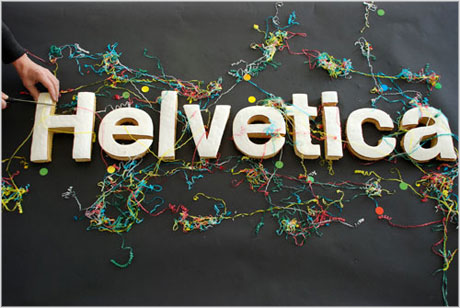
Helvetica.

I hate this font. But let me tell you why.

It isn't enough that it is used by thousands upon thousands of brand-names.


It would only be typical then, that it would be selected as the official font of such a hallmarks like Apple, infecting not only the logos, but the actual text of my email and text messages.

But that isn't enough.

It is also used OFFICIALLY, for the font of the MTA and Chicago Transit.

So everyday that I rode the train home in New York, I didn't just ride the 2, 3 to 135th street, I rode it to:


Consider myself branded.

This is the font of brands. It is perpetuated by brands. Unlike Arial, a very similar font that gained popularity by being a computer default in countless programs such as Microsoft Word, the only standard Helvetica has assumed is that of the brand: the clean, direct lines which design loves, the evened, paced weight, the proportional spacing, and the lack of any sort of hand-writing appearing calligraphy styling.

It is cold, proportional, and machinic. It is totally modern. It is simple. Different. Apple.

You see? I didn't even mean to do that, but I slipped into design-brain-fuck-land, just by thinking in Helvetica! I dreamed that the entire world was proportional, and my interface was entirely clean and smooth, and every person wore black jeans and black mock-turtle necks. Most importantly, we all only spoke in informative slogans, and nothing was wasted. All of us sans-serif enuchs were perfectly happy, because we had been designed to be so. No third-party OS, no viruses, no pulse. Simply: Bliss.


I don't mean to pick on Apple, but they are certainly one of the most-recognizable users of Helvetica, and for the same reason that they design products with slim form factors: it is recognizable and clean, and sticks in the mind like an icepick covered in wall-paper glue.

But enough of this effluviac outbursts at the users of a mere font. Perhaps I should talk more about the font itself.

It was designed in 1957 by the Swiss--at the height of the fame of Swiss design and graphic arts.

According to Wikipedia, a goal of the typeface was: " to create a neutral typeface that had great clarity, had no intrinsic meaning in its form."

This is pure modernism in its most commercial state: form is function, right? No form other than the meaning it intends to transmit. It is pure, unassuming, and liquid. A bright, shining, blue-eyed Jesus of fonts. A white dove. Concrete. White plastic.

But isn't this a form in itself? A metaphysical attempt to reach the design-centric esoteric knowledge of pure performance... it is a product so useful we cannot help but buy at least one or two. Give them as gifts. Decorate with them. They are objet-de-arte, a paper-clip so beautiful we buy them just to place on the desk. We put them in museums, because we admire something so useful. In fact, we would never dare scratch it surface with actual use--that is to say for a font, actual content--because it would dirty the purity of the form which we so admire: no form at all.

This is sounding familiar. A form so ideal as to take on the qualities of form itself... an object so perfectly useful as to defy any actual use... a commercial unit that defines the goals of commercialism perfectly.

A Commodity.

Leave it to the Swiss to turn phonemes into commodities of exchange. Leave it to the Americans to buy into a commodity with everything they've got, putting the whole corporation on the back of its cleanly designed weight.

I won't push the comparison too far; I respect the philosophy behind exchange commodities too much to act as if Helvetica actually has bearing on the linguistic economy as great as the monetary system.

But at the same time, the similarity is uncanny--and deliciously so. The idea that a typeface could be designed without form! As if it was pure transaction of linguistic value! As if there was no aesthetic surplus value added by the appropriation of a certain type by so many major corporations and institutions; as if they were not telling us something with this form; as if the casting of logos into typographical symbols was not itself a massive trick of design! Which is more recognizable: the Apple logo, or the word "iPod" written in Helvetica? You might recognize the apple, but you are forced to read "iPod" over and over again by the mere naturalness of written communication. By developing a non-destracting design which feeds into the eye's sense of proportional weight, they are almost forcing us to speak their product name outloud, every time we use our eyes.

Well, maybe it is not as drastic as all that, but if you believe in any fundamental principles of aesthetics and design, it isn't too far off.

What they've done is developed a brand for modern commercialism, a brand for branding, and the representative product of brand is Helvetica: the type without form, and only function. No goal but the propagation of product. No exchange but more exchange. No value except that for which it can be exchanged.

John Carpenter should have definitely used Helvetica for the font of the brainwashing signs in They Live. His font is a little too 1940s, a little too bold. Perhaps he was thinking of Fascism more than the commercialism of the post-war period.

Far be it from me to call Helvetica a fascist font--or even a capitalistic font at that. It's only a damn typeface.

But, I think the link between its intended design, its use, and its subsequent popularity are quite interesting. Helvetica will be a signpost of our times. It is a symbol of late Capitalism, by way of being a symbolic type par excellance. And as such, it is ugly, and dispicable. It is the metaphysical grapheme of consumerism, and I hope it dies along with it.


...but then again there is this:

"Helvetica is a relatively contemporary typeface, protected by Trademark owned by Linotype, that was designed in 1957 by Max Miedinger for the Haas Type Foundry in Switzerland. However, there existed an earlier typeface that was designed and put into use by Joseph Goebbels for the German Socialist Party and it is Goebbels' type design that is regarded as being the forerunner of what was later the derivative typeface (re)designed by Miedinger and named as Helvetica.

There have been a few books written about Helvetica recently from contemporary perspectives and although well written, they revise the history involved. Reading a few, I see an effort to both apologize for a past creative work effort and to deny that it occured and for contemporary, political reasons. However, in Literary Theory, there is an understanding of arts apart from troublesome political pasts, creative works as now having been "cleansed" in the conceptual and theoretical and thereby considered on their creative merits without association with offensive political characteristics. Helvetica is a work of art that has been "cleansed" in this regard and it is a disservice to try to rewrite the history of the art involved out of fear for the climate in which the art was created; and, using the art or making reference to it does not thereby imply nor make reference to the now-removed, offensive originating circumstances -- not in the case of this typeface nor in the case of other, similarly considered creative works."

Ahh! Fascist fonts!

2/19/2009

What's a Tautology?

Oliveslav posted this, and while I will also redirect you, the picture is so apt I had to simply re-publish:

1/31/2009

Eichmann Design

So, what's the deal with Bruce Sterling anyway?

He certainly seems to have his hyperlinks in a lot of Internet pies.

I suppose if your credit in many projects is labeled as "____-visionary", then that sort of thing just spawns new links to things.

Also, he would appear to be just a good old-fashioned interesting guy (sort of a Man of Letters for the media age).

The point: here I am, again, posting about something he posted. (Though, let's just say it straight out--his blog is by far one of the best sources for "original" content posts. That is, I find many things from him first, and then see it re-posted other places. Sort of like the re-posting I'm committing right now.) A lot of hyperlinks--a lot of pies.

Anyway, the something is this thing - http://semanticstudios.com/publications/semantics/000228.php

I'm not going to give it a cleverly-named hyperlink. Frankly, I would rather not post about it at all. I even instituted my new "24-hour" policy, saving the link and waiting 24 hours (about a week in Internet time) to make sure I really had something worth saying before I posted.

And that asshole's picture on the linked page is still pissing me off.

Alright: so I don't know if he is an asshole. He could be a great guy. But because the content of the page is driving me crazy, I'm going to pretend he is a jerk, (and not say his name). Because that's what we do with "Little Eichmann's" right?

Whoa! Easy there, tiger! Why don't you just stick to insulting the guy personality?

Because this is micro-fascism, pure and simple.

I have nothing against product design, or information architecture. I am huge fans of both as disciplines, and am constantly amazed by the people who do this sort of work.

It is just this simple fact: the concepts that he proposes in outlining the conjunction of product design and information architecture, what he calls "experience design", go against everything I know about believe about theory and philosophy.

I'm not saying he's incorrect. I'm not saying he's inaccurate. He may describe the current field of design and information architecture better than anyone ever has. But what he is describing is against just about everything I know and believe.

Philosophy and modern critical theory, though often giving credit for bringing the relativism and anti-moralism of the post-modern age to the mainstream, are not laissez-faire disciplines. It is precisely the prescriptive nature of theory that rejects such dogmatic world-views as idealism and moralism. Of course, after the philosopher finishes his tirade about the errors of the world, if you ask him/her "so what do you actually believe?" you will probably get a good deal of specious circumambulation and general backpedalling. This does not mean s/he does not have an answer to the question, it simply means the answer is impossible without a lot of well-practiced specious circumambulation and general backpedalling.

The goal of thought is to understand and organize our consciousness of the material world, and by doing so, seek to improve it. Philosophers and theorists are working at it, and anyone can take a look at the world around them and see the need is dire. However, this doesn't make the work of thought any less difficult and time-consuming. Luckily, we've developed some good tools over the years. Philosophers have a pretty decent "means of production" at their disposal, and some of the best "thought designers" in history have contributed to our material work on thought and theory.

But this fellow ignores all of that. Rather than implementing a single feature of responsible "thought design" in his notions, the twenty "deliverables" mentioned are antithetical to any sort of critical thinking, most simply because they reject the actual "critical" element of thought and replace it with jargon, slogans, icons, and hype. This is the philosophy of capitalism at its best/worst--rather than use any means of thought, he has done an end-run around theory and formed himself twenty easily identifiable products, i.e. deliverables. He hasn't built these ideas in the time-tested practice of thought--he's simply gone out to the streets and picked some ideas that sounded like they would be popular. What part of design is designing popularity? Isn't the goal to design new things and improve upon old ones, thereby improving user experience? What in design theory says it is a good idea to take a product and repackage it into another product? The art of USB dongles? It's surplus-value at its least productive. These "deliverables" are the branding of thought into a product. Thought (TM): in easily consumable packages, ready to be bought and thrown away. And naturally, the folks in his comments section eat it up.

It would be one thing if he created these "deliverables" from nothing. But he committed the worst fallacy of ethical philosophy in designing these products, making them actually harmful, rather than benignly un-caloric. He starts with assumptions, and works backwards. (Milk is white/this milk is not white enough/let's add melamine.) It's worse than a fallacy actually, because after his flawed premise that "anything the use will buy is good design", he doesn't even work backward with logic. (Milk is white/this milk is not white enough/let's add lead.) These concepts don't rely so much on flawed logic, so much as no logic at all. They are, in a way, deductive paralogisms: he takes particular examples, which may or may not be true, and then falsely derrives inferences from them. Not so much an error as a complete lack of method entirely. They're not sound; they're not logical; all they seem to be is his particular view of the world--a world in which thought only exists in its ability to be sold to a consumer.

This could very well be a new stage of capitalism, rearing its head. Surplus-value, classically an abstraction of material circumstances used to siphon material production, has now leeched its way into the super-super-structure: our thought itself. It is wrecking the material logic of thought! It's siphoning off intellectual production! It is a contradiction of the material fundamentals of reason itself! And unlike some other materialists, I have no confidence that such contradictions will subsume themselves.

But enough of this abstraction. Let's look at the "deliverables" themselves, and try to figure out how he thought this might be a good way to think.

1. Stories. "A good story about a user's experience can help people to see the problem (or opportunity), motivate people to take action, and stick in people's memories long after we're gone." And a good joke can make you hungry. What the hell is this supposed to mean? Narratives are important to people, sure. But narratives sell wars! Narratives put people in camps! How about rather than tell people a story about how good a product is, we ask them to tell us a story about their ideal product? Then we can analyze the story, and see what their stories tell us about their needs and goals. Oh, but that might mean I have to listen, rather than just speak.

2. Proverbs. " High-concept pitches, generative analogies, and experience strategies invoke existing schemas to put the world in a wardrobe." Oh yes, for example: Arbeit Macht Frei. That was a brilliant proverb. Just take a look at his own sentence: it can mean whatever the hell you want. "We're all in this together", or "we need more lebensraum". What was it Bush said? "Fool me once..." yeah, exactly. Proverbs--the unequivocable enemies of logical thought.

3. Personas. "Portraits and profiles of user types (and their goals and behaviors) remind us all that "you are not the user" and serve as an invaluable compass for design and development." I think we normally call these stereotypes. Remember, the customer doesn't think like you--he is stupid, likes small form factors, and eats babies.

4. Scenarios. "Positioning personas in natural contexts gets us thinking about how a system fits the lives of real people." Because this obviously makes more sense than asking real people about their lives. I do most of my sociology through reality television now. Have you heard? Most of them are real people!

5. Content Inventories. "Reviewing and describing documents and objects is a prerequisite to effective structure and organization. The artifact (often a spreadsheet) is a sign of due diligence." Ask anybody in production how useful they find inventories to be. It wastes time to collect, wastes time to correct, and it even if its right, it tells you what is sitting right in front of you. And due diligence? I would think if this Year of Our Finacial Apocalypse taught us anything, it is that due diligence doesn't mean shit if you don't know how to count.

6. Analytics. "We learn by wallowing in interaction, search, and navigation data. And, we teach by uncovering and charting the most pivotal landmarks, portals, paths, and patterns." Isn't the proverb: 'we learn by doing'? Remember: economists don't make the economy, they just try to understand it six months later. Now, analysis would be something: critical investigation of method and process. If you don't use the right metric, data is nothing. (See above comment about due diligence).

7. User Surveys. "Asking the same questions of many users across multiple audiences can reveal existing gaps and common needs, and show how they map to customer satisfaction." This is a deliverable? Really? A Survey? Well, it worked great for No Child Left Behind. Bring on the standardization!

8. Concept Maps. "In the territory of concepts, a good map can help us see where we are and decide what to do by establishing landmarks, clarifying relationships, and identifying true north." This makes me want to vomit. While its not overt fascism, the marketing-consultant schmaltz of it is still killing me inside. How about instead, "what is a good map?" That would be an actual, interesting concept. This guy's amazing theoretical mind is telling me what a map is for. Is he getting paid for this?

9. System Maps. "A visual representation of objects and relationships within a system can aid understanding and finding for both stakeholders and users. Shift gears from "as-is" to "to-be" and you have a blueprint for structural redesign." Wait a minute, he just copied #8! But seriously: one of the biggest swindles of the last Bush administration was the re-designed concept maps of DHS after Katrina. Look it up. They gutted the organization with a rusty, bureaucratic sword. You couldn't even find an email address, a PO box, or a web page by the time they were done with their system maps. This is a literally recipe for disaster.

10. Process Flows. "How do users move through a system? How can we improve these flows? A symbolic depiction can enlighten desire lines and show the benefits of (less) chosen paths." Three deliverables in a row have told me to draw a picture. Next he'll be telling me to make a Powerpoint. First Chekoslovakia, then Poland!

11. Wireframes. "Sketches of pages and screens can focus us on structure, organization, navigation, and interaction before investing time and attention in color, typography, and image."
Is this a sketch, a flow, a diagram, or a map? What's the difference? Those would be actually thought-provoking questions.

12. Storyboards. "A series of sketches with narrative displayed in sequence can tell a story and paint a picture by showing interaction between users and systems in context over time." See what he did here? He combined "stories" with "pictures"! Next stop, rhyming lyrics, and cats in hats!

13. Concept Designs. "Interface designs and composite art invoke an emotional response and capture people's attention by presenting a high-fidelity image of how the product could look." He seems to have made good use of this one with his own "receivables". Too bad most concepts never make it to production. I wonder why?

14. Prototypes. "From paper prototypes to pre-alpha software and hardware, working models drive rapid iteration and emotional engagement by showing how a product will look and feel."
Doesn't this refute the previous? What good is a concept if you can't get it to work? Also: it seems that he stopped short of a prototype for his own receivables. I can tell from the concept that it wouldn't work.

15. Narrative Reports. "Writing is a great tool for thinking and organizing. And, it's hard to beat a written report for presenting detailed results and analysis or formal recommendations. Reports can serve as a container for most other deliverables." Well said. Too bad he didn't follow his own advice. But wait: he never specified that the writing be good, or make sense! All style, no substance. No wonder they call it "Intelligent Design"!

16. Presentations. "As the lingua franca of business, slideshows (and videos) can be great for telling a story or painting a picture. They can also be dead boring, unless you present in person, hit the highlights, and beware the bullets. Presentations can serve as a container for most other deliverables." Thank goodness! I thought we'd miss Powerpoint! Powerpoint: your most boring ideas, presented in a font and color of your choice. Now, with Clip Art!

17. Plans. "Project plans, roadmaps, and schedules guide design and development activity by clarifying roles and responsibilities." Could have used one of these for the Iraq Occupation. Note to self: come up with one for the Economic Bailout. Point: even bad plans are plans. Furthermore: even terribly destructive plans are plans.

18. Specifications. "An explicit set of requirements describing the behavior or function of a system is often a necessary element in the transition from design to development." Fuck! Enough of these sorts of "deliverables", and I'll drive my car off a bridge! Sure, this one is meaningless jargon, but it's also the exactly backwards to how design should work! Should you be developing function FIRST? Great product! Now: what should we make it do? WHO THINKS THIS WAY?

19. Style Guides. "A manual that defines a set of standards for identity, design, and writing can promote clarity and consistency." Yeah, it was the consistent font and margins that really pulled this set of deliverables together. Maybe what it needs next is a good logo, or a symbol. Maybe on a flag? Then we can have people salute that flag! If they don't we'll shoot them! Clear, and consistent!

20. Design Patterns. "A pattern library that shows repeatable solutions to common problems can describe best practices, encourage sharing and reuse, and promote consistency." Much of these ideas, in the most generous of terms, seem loosely organized by the principle of designing a product for a particular situation and audience. Now, he's telling us to to the reverse. he told us to use stereotypes, then he told us to do surveys. He told us to sell the idea, then he told us to listen to the customer. This is the idiotic championing of the contradictory schemas, which you may remember from such wonderful methodologies as State Communism and Conservatism. Give them a couple of ideas, and don't worry if they contradict each other. Just yell them over and over, and the whole crowd will yell with you. Repetition is the key--substance is meaningless.


Okay, so perhaps I was a little harsh: not every one of these ideas is fascist. But none of them are smart, well-described, or planned in any sort of theory that could be termed "progressive, useful, rational thought". And, well, some of them are sort fascist--particularly 1-4, and maybe 6 and 19. This is the point of the "little-Eichmann", you don't have to wave the flag, you just enable the people who do. If design, especially information design, doesn't think that enabling harmful thought processes is its problem, it has another thing coming. Even if your goal is to make money, which I totally understand, debilititating the customers, misunderstanding their needs, and designing useless crap as a result is hardly a sustainable way of doing it. Think about any time-tested champion of design. Now, think about how many of them focused on idiotic and illogical "receivables" like these. Maybe they used parts of these concepts, somewhere, somehow (with such broad, nebulously defined ideas it would be tough to avoid resembling some element of it), but the core of their design principles involved actual creative thought. Don't just take it from me, the materialist philosopher. Ask an actual designer.

There is a reason that philosophy is still around. It's in the business of designing ideas--and this is as self-referential a design process if ever there was. Philosophy knows that good thought is not going to please the customer all the time. But eventually, good results trumps any number of stories, presentation and stylesheets.

12/08/2008

Credit Seize


Though the story is attracting a fair amount of media attention, likely due in no small part to the president-elect's comments on the matter, if you have not heard:

Workers Occupy Chicago Factory

The factory was repossessed by the Bank of America, who is claiming that it is the company's responsibility to provide severance benefits. The owner's appear to have skedaddled, possibly to open up another factory in Iowa (see details of these clues in the Tribune article here).

According to the NYT article, the workers are keeping it fairly relaxed for now, keeping the factory clean, simply demanding their due severance and vacation pay. Sounds good. Hopefully, with the media attention they will actually win their benefits. It seems as if many politicians are ready to jump on this one as a high-profile opportunity to improve their worker-relations cred.

Mostly I am thrilled to see workers ready to embrace occupation as a means to obtain what is rightfully their own. The position of the BoA is nothing less than the fundamental problem with the American economic system: by quick transfers of debt and/or ownership responsibility is disavowed. I don't have a problem with derivatives and other debt-related instruments on principle; it is the manner in which they are easily allowed to be cut off from the market dynamics that makes them dangerous. Risk and liability are part of debt--these capitalists think that they can avoid both simply in selling the debt or transforming it into a new form. This is the crisis of capitalism itself--way back to Marx. It's reverse surplus value: it's surplus risk. In the same way that value can be accumulated through manipulating production conditions, they are manipulating the negative of value, debt, by fixing the financing conditions.

Back in the day, workers would occupy their factories to get more value from the surplus value quotient. Now, they are trying to get it from a different source: the bank itself. That's more difficult, because the bank doesn't need the factory to run as much as the owners do. How to you seize a means of production with no physical state?


UPDATE: Apparently, in Argentina this has been going on for some time, but for real.

10/06/2008

You Can Take That Panic to the BANK!

As I try and digest the most recent government hoodwink, in the form of the Emergency Economy Stabilization Act, several news articles have caught my eye. I could just ruminate about them to myself while sitting in the closet sipping whiskey from a jar, but I promised myself only to do that once a month. Instead, I'll share them with you!

I'll get right to the point: we done been Patriot-Act-ed. Yes, I know; my posts on this topic of late have been turning up the vitriol even higher than my normal 50% by volume cut off level. You may think that this post is shaping up to be just another rant. Let me assure you: while it does fill me with rage, I do have some actual facts in tow to back such assertions.

Check it out: terrorists (supported by the government?) kill people -> nation quakes in fear while legislation consolidating the nation's autocratic power sails through Congress. Happy Department of Homeland Security to you, the Department of Peace vulture born from the ashes of the Immigration and Naturalization Service (not a coincidence, but that's another story).

Now re-check: bankers (supported by government) screw over people trying to buy houses -> markets quake in fear while legislation consolidating the nation's capitalistic power sail through Congress. Our current door prize is the Office of Financial Stability, attached to the Treasury. You have to love that name. It doesn't quite say, "propping up our failing economic system" in the same way that "The Strong-Arm of Capitialism League" would, or the way a dilapidated FEMA trailer does. but OFS is good enough. It also lends itself to the great anti-globalization/capitalism slogan, "Fuck OFS!" My copyright certificate is in the mail.

Doubt it was fear that motivated? Well, seeing "777" written on the front page of my local paper makes it pretty clear what the average person was supposed to take away. But let's not trust an average person, let's ask a congress-person!

From the New York Times: "Fears about the economy also motivated support. 'Nobody in East Tennessee hates the fact more than me that I am going to vote yes today after voting no on Monday,' Representative Zach Wamp, a Republican, said. 'Monday I cast a blue-collar vote for the American people,' he continued. 'Today I am going to cast a red, white and blue-collar vote with my hand over my heart for this country, because things are really bad and we don’t have any choice.'" Well, Representative Wamp, you've made it pretty clear. Instead of voting in the name of your constituents, you decided to vote with your Jingoistic shirt on. Good on you.

One day, the bill is opposed because the constituents demand it. The next, it passes. Apart from a few tacked on incentives, the only thing that changes is the Dow dives by a number that is only 3 digits away from 666. What changed? They added the FEAR.

But after all, FEAR is the market. Capital is the universal unit of the irrational mob. Don't get me wrong, the mob is sometimes good. All understood signifiers derive their meaning from the linked desire of multiple individuals; linked desire is the mob. But this also means that it can get out of control. And once you link these mob-signifiers to things with actual material significance, like, say, mortgage-backed securities, a simple scream can mean that the government has a new bureaucratic entity run by good-old boys from Goldman Sachs. Or, so it seems.

Hey, and check this out too. You want to see mob-signifiers move a market? I found this story on Slashdot: it appears that a web crawling Google engine accidentally reprinted an old article from 2002, when United Airlines was just about bankrupt. Investors, thinking it was a current article, dumped the stock, which declined to $3 a share from $14, evaporating 1.14 billion in market cap. BECAUSE OF GOOGLE! Ahhhhhhhhh! That's okay, people pass laws in such ways these days. Soon enough, Google will be fact, so that won't be a mistake, it will be reality.

It happened again! Some jerk on CNN's newsTwitter thing posted that Steve Jobs had a heart attack, which he totally didn't. Too late! Apple's stock dived 9%. Now they blame this on the stupid citizen journalists who try to be real journalists, posting lies on their stupid blogs. Stupid blogs!

But wait, real journalists are just as stupid! Take the case of Gary Weiss, the BusinessWeek journalist who, it has been pretty conclusively proven, rigged Wikipedia to spread disinformation about selling "naked short" stocks, a strange market derivative that has been blamed for the current crisis almost as heavily as mortgage-backed securities. This disinformation was not accidental, but postively malicious, though the motive still remains unclear. "Real" journalists trusted Wikipedia, and blackballed CEO Partick Byrne, who was trying to warn marketeers about the dangers of the "naked short" phenomenon. Total cost: unknown. $700 billion dollars anyone?

So, what the deal? Well, it appears that is incredibly easy to manipulate large numbers of Americans and their representative leaders via the equity markets and the information markets. Effect: so-called "value" evaporates, leaving someone holding the tab. And even worse: government, as is typical in the case of panic, responds with authoritarianism, bureaucracy, and worse, which history always proves is worse for you and me.

'Adam, are you arguing that panic leads to Fascism?' Well, I would hardly be the first. But it's funny that you should ask. Apparently some one suggested to US Representative Brad Sherman that if the House did not vote for authoritarian bureaucracy as a delightful middle ground, the next step would be the end of Posse Commitus. I.E. You would have soldiers enforcing local "law and order".


Just a little something to think about. Sounds kind of familar, doesn't it? Say, about seven years ago? You, me, the president, congress, the end of civil liberties, the legalization of torture, and an ongoing, useless war?

Oh, the Dow dropped another 370 points today. Maybe its time to write your congressperson.

6/22/2007

Hedge Funds, Conspiracies, and Goats

News for Those Who Wouldn't Care: The firm Blackstone Group LP raised 4.13 billion dollars today in the largest IPO in five years.

Ordinarily, you, me, or almost anyone that wasn't in investment finance wouldn't care, or even notice this headline amongst the other ignored Bloomberg ticker items. But, today's blog is different than all the other blogs because I also happened to be reading about hedge funds.

Recently I decided that I should become much more knowledgeable about economics. Sure, the uninterested pseudo-anarchist critique of capitalism will get one through a conversation over drinks, but if we're really going to start breaking them chains we're going to need a more materialist critique.

And boy/girl, have we certainly come a long way from Capital Vol. 1. Let's follow a little chain of ideas, shall we?

Now, Marx was groundbreaking for identifying and theorizing the concept of exchange value. Over-simply, one product is exchanged for another, creating an abstract unit of value that is "equal" to both. In a social marketplace this abstract quantification is money. Rather than the labor to make one hat being worth the labor to make two loaves of bread, now both are equal to five dollars. With five dollars you can get either a hat or bread, or you can be paid for making either of those things for someone else.

Or, you can collect 100 times those five dollars that you saved by selling the hats or bread you made, rent a building with a huge stove, buy a bunch of flour, and then pay other people a fixed rate to make loaves of bread. If you are clever enough to make more bread using your factory than all those people would make in the same time on their own, you can pay them the same that they would make selling their own bread, and keep the profit from the extra loaves of bread for yourself. Marx calls this surplus value, and it is the beginning of capitalism.

At this point, you can start playing with other options, like creating a brand to get a bigger market share, decreasing the quality of the product as much as possible without hurting margins or locking out or intimidating your workers to pay them less money, all for increasing profits. Alienation of labor, exploitation of workers, caveat emptor, etc.

But this is only the beginning. Marx totally did not foresee capital gains. Making money on the concept of making money, not only on the capitalization itself.

Everyone knows that you can invest in a company in the stock market. This is a market that sells interests in corporations; the product is a piece of the capitalization itself.

Then, once this becomes increasing complicated, you can give your money to a company that will "play the market" for you. Mutual funds try to sell you their investing, a product based on the manipulation of the products of making products.

And if you are a really big player, you can get companies to invest the money that you have stored after making it from all these schemes. These are called hedge funds, and are maybe the most recent incarnation of capitalism. Although probably invented in 1949 with the concept of "hedging" risk by combining investments, the current number of unregulated, limited-access, accredited investor only funds is unprecedented. Depending on the fund, a bank or a million-dollar plus investor can make 20%. Of course, there is still risk, and if the fund invests heavily in some market that tanks, like real estate or currency, you can still lose.

Which brings us to Blackstone. It is a hedge fund that turned around and offered public stakes in its overall company, different than the investors in the fund. The product is related to the product of producing products based on production. Holy crap. 4.13 billion dollars.

It is literally mind-boggling to conceive of all the ways to make money off of making money off of making money off of making money. The network is so big, there is no way to pull the plug anymore. Or even know where the plug is. WorldCom, Enron, those guys are only the dumb ones who get caught. What can the SEC even do at this point? In the hedge fund scandals of 2003, every major fund was found to be doing something improper. No one went to jail, there weren't even any convictions. They made some new laws, and there were some millions of dollars in settlements. What is 10 million dollars in a 4.13 billion dollar economy? A percentage, nothing more. The SEC is just another corporation, and it isn't even a good one. They really haven't identified a good business model. They are simply trying to surf the trends.

The potential for conspiracy is so rampant, that conspiracy is pretty much business as usual. If you aren't involved in a conspiracy, then you aren't in a good business. There are so many people in the world, so much money, so many organizations, power structures, combines, and pathways, that if you aren't exploiting some, then you are getting by on a subsistence economy. You aren't "making" anything anymore. Only consuming.

You have to really have your eyes open to any possibility of profit in this day and age. What can we finesse? What can we manipulate? What can we control that no one has even discovered the possibility of controlling, in order to gain the upper hand? Everyone does this, from the fast-food worker who snatches fries when the boss isn't looking, to the boss who snatches tips when the worker isn't looking. Of course, some people trust each other, but it is only so that they can do better than someone else somewhere else. Competition is the name of the game, and the name of the competition is the game.

The CIA really has the best mindset about this, I think. They aren't concerned by what is real and isn't, what is the law and what isn't. Going for the W, all about the win. I'm reading this book right now called The Men Who Stare at Goats, by Jon Ronson. It's about the CIA and Military Intelligence experimenting with new age and paranormal gurus in the effort to make super soldiers. Sure, why not? Maybe walking through walls and stopping goat's hearts with sheer will is impossible. If you want to be a superpower, you can not afford to not try and make super soldiers. What if someone else figures it out before you? Then you are fucked. And you better believe that US intelligence can afford to try and fail, what with more than half the government's money going to the military. Countries are just big corporations now. I think it is stupid when reformists try and argue that corporations are running the country. That's like being upset that a chairman of a corporation was once a CEO of another company. Of course! What sort of game do you think this is? Making money to make money in making money about money. Money isn't just the grease that makes the world go round anymore; it's the grease, the gears, the levers, the load, the ropes, and the chains. Is it true or false? How can a number be false? It can only be more or less.

If you know of any mutual funds whose plans include psy ops and telekinesis, let me know. I've got some money to invest, I'm just looking for the right product. I mean, market.