5/24/2010

CPSC Micro-fiction #6


CPSC Notices 5/21/10

Chocolate Soup Recalls Children’s Hooded Sweatshirt Sets with Drawstrings Due to Strangulation Hazard - The sweatshirts have a drawstring through the hood that can pose a strangulation hazard to children. In February 1996, CPSC issued guidelines (pdf) (which were incorporated into an industry voluntary standard in 1997) to help prevent children from strangling or getting entangled on the neck and waist drawstrings in upper garments, such as jackets and sweatshirts. No injuries reported.

HP Expands Recall of Notebook Computer Batteries Due to Fire Hazard - The recalled lithium-ion batteries can overheat, posing a fire and burn hazard to consumers. Since the May 2009 recall, HP has received 38 additional reports of batteries that overheated and ruptured resulting in 11 instances of minor personal injury and 31 instances of minor property damage.


Micro-fiction 5/21/10

Your chances of exploding are roughly one in fifteen-hundred.
Used to be far worse.
And one in fifteen-hundred? Yeah, it could be you that bursts into chemical flame while downloading data to your hoodie. But the vast majority of people will enjoy the fabric net, and will live their entire lives comfortably in their e-clothes, until the day they're hit by a bus, die of radiation exposure, or one of the other hundred ways to catch it in this day and age.
We need electricity. The info-blankets in which we shield our naked flesh require energy. Better lithium-ion covering your skin than fissile material, or soaking yourself in gasoline. Chance could be one in a hundred--could be one in ten. They'd still line up outside my shack for a battery swap, and then go off down the street, connected into the network, as they must be. As their employers must. As their friends must. As their sexual partners must.
Without these batteries pressing against their flesh, they would not be human beings. They would be monkeys with sticks. Neanderthals covered in hair. Peasants digging in the mud. Don't believe me? Look it up. Check out the pictures. See? Explosive-free living is as about as fun as dysentery. I said, look it up. It's all there.
You know what, kid? I'm busy. You don't want it, live your life trailing a plug behind you. Standing against the wall. I've got customers here. I'll have another thousand and five-hundred by 3PM.

For information about this series, please see the introductory post.

Let me tell you something, son

"I boldly predict that, in about a decade from now, rather than disappearing completely, our strongest customs and traditions will become stronger."

I'm so used to hearing of (as well as predicting myself) a future in which we are all atemporal, cosmopolitan, jet-packing cultural omnivores, (or, naturally, some syncretism of these) it sounds almost radically prophetic to hear a prediction to the contrary. But hey, if Twitter does anything, it convinces you that your sub-culture actually does rule a dimension of the universe. You are the new scholar, the head of the pack, the crest of the wave, instantly at 140 characters a breath. The internet is a bank of parallel petri dishes, arranged in towering capital capacitors of human-hyrid cannibalism, along the burnt out crust of Zizek's Matrix-esque Desert of the Real, allowing us to live our own epistemological fantasies of truth and correctness, which the real electricity alligns our particles for some sort of nefarious, exo-human machine...

Oh, sorry.

But why shouldn't the Internet, which is often considered to be a folk-force in itself, simply become the repository and conduit for all of the folk-forces that have already existed throughout the history of time? Sure, some people will dodge back and forth, amazing us all with their well-readness, but others will just marinate, assuming most of the "democratic-internet" is backing them with their Tea Party Twitter-ness, or their Bride-Burning reality shows, or alt-sex mercenary conventions, or whatever it happens to be?

This is not to say, "well, if this great E-Democracy doesn't unite us, it will certainly divide us" in a founding-father Patriot/Anti-Patriot QuoteThink Ourosboros. I think it is more indicative of the fact that whatever we think things will be, of course they will be, but at the same time being other things, until we can get it together to sum it up in a snappy quote, and then we realize, "oh but it is actually that" as well. Will traditions come together, or dissolve? Uh, whatever! Yes/no, of course!

I think the operating quote here is not "Things fall apart, the center cannot hold" but "What if the empire never ended?" Not because of the meaning inherent in these sappy quotes, or because the former was uttered by a poet, and the latter composed by a drug-addled mystic/half-employed creative, but because we have reached an age where these quotes mean the same thing, or at least can be referenced together, and this is not merely some half-assed syncretism, but could pass for not only actual rational thought but deft criticism, and is instantly published along with anything else a minute after I just thought about it.

And so, the tough part is going to be remembering which tribe you come from, and figuring out how to quickly through the gang sign, when a group that doesn't exactly seem coherent, but certainly is an Other gang, meets you in the streets. Because despite the cold comfort of a blog, all drain pipes eventually lead to the street. Because a bullet from a gun is the final point of punctuation, because paving stones are the network of last resort, because eventually the electricity will go out, and we'll all wander into the streets, and have to find something to do then.

Trouble, with a capital T. Right here in Internet City.

5/21/2010

The Natural Algorithm Hustle

Here is/was my contribution to 48HR Magazine. They did not publish it, though it seemed as if they had some interest. Perhaps because I couldn't reveal my friend's identity, who I met in grad school, it seemed a bit dicey. Anyway, here it is.


My contact is an algorithmic programmer at an wealth management firm in downtown Chicago, the firm managing somewhere in the neighborhood of seven billion dollars. I spoke to him via email, this morning. He was in the "hole", as he called it, as he is most of the time. His name and company are withheld, to keep from violating his non-disclosure agreements. I'll call him Al.

Adam: Tell us where you are right now.

Al: I'm in a small room, approximately ten feet by twenty. There are no windows. It's lit by several lamps. Pretty nicely furnished. Big flat screen TV, comfortable chairs. I'm at a long desk, with five computer monitors. Most of the rest of the space is taken up by the server racks. The room is fairly cold, what with the climate control. We call it the hole, because after spending twelve hours or more in it and coming out, the light can be, well, shocking.

Adam: What is it that you do there?

Al: I design the algorithms that control our trading programs, and watch them function. In other firms, I'm known as a "quant", or a "cruncher". We run our algorithms differently than many firms though; rather than simply doing quantitative analysis of trading markets, we guide our trades by a method we call "fractal market distribution".

Adam: What is fractal market distribution?

Al: Exactly what it says. We distribute our market interests according to fractals.

Adam: Like the well-known patterns, Mandlebrot and Julia sets?

Al: Not those algorithms, but it is essentially the same. Those well-known fractals are graphs of particular algorithms on an imaginary number axis, and zooming in on a particular area. We aren't making a visual pattern, but governing our trading behavior according to the described dimensions of an algorithm.

Adam: How does this differ from the algorithmic trading most firms do?

Al: Most firms take the movement of the markets as the dimensions which their algorithms seek to describe. They analyze the quantitative data of the market in the attempt to predict the market, or at least make trades that make sense according to the data of the market. Our algorithms don't come from quantitative analysis, at least originally. Though of course, we have to find a place of correlation between our algorithms and the market in order to design the trades.

Adam: What do you base your algorithms on, if not market data?

Al: Pretty much any sort of naturally-described motion. Anything that can have data collected on it. Thermodynamics. Virus replication. Quantum physics. The weather patterns. Auto traffic models.

Adam: You make trades based on the weather?
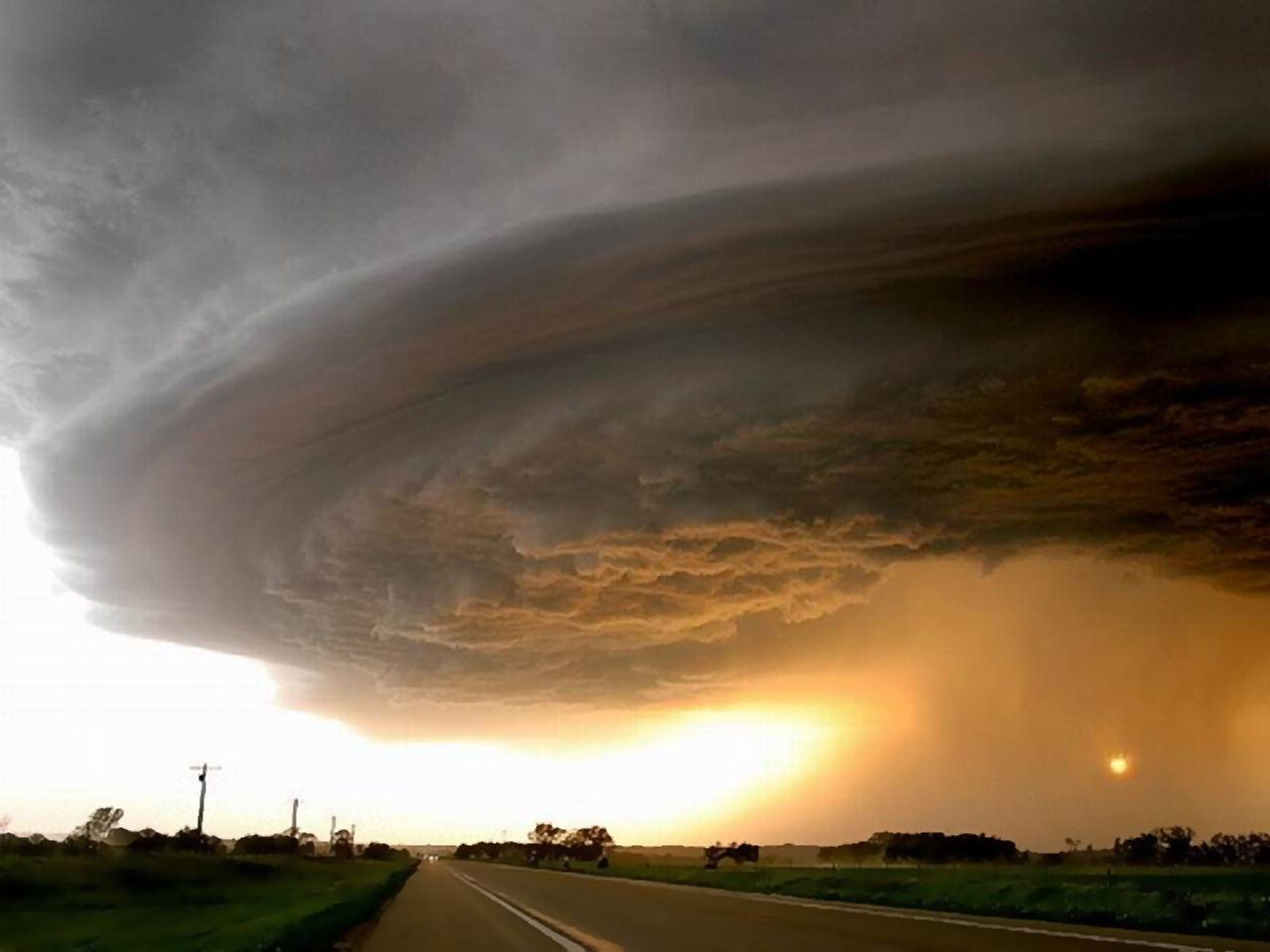
Al: Well, it sounds that way, but not really. Any of these natural phenomena can be described, though not perfectly, with algorithmic modeling. I work with a guy at Cal Tech who specializes in these sorts of complex mathematical models. I take these models that he defines, and then interpret them, finding how they correlate to market data. They aren't microcosms of the market--but generalized patterns of natural motion tend to have corrolaries in other parts of the natural world. Hurricanes don't match market crashes, but pressure shifts on a certain day might be similar to currency fluctuations. The skill is in finding what to apply the algorithm to, and to have the fortitude to see the experiment through.

Adam: And it is successful?

Al: Largely, yes. We tend to do consistently 35% over any particular market in which we do business. This Thursday, we earned 15% on the market crash. In one day. We were using an algorithm based and inspired by bee movement.

Adam: You're referring to Thursday, May 6th, when the Dow had the biggest intraday loss in history, losing over 1000 points before rebounding. You say you made 15% on a single day? Using bees?

Al: Bees are a social entity. Their motion, both in their hives and in their environment, are based upon what are basically social cues, in an insect society. Any sort of panic is a social phenomenon. By studying one, which is easily mappable, you can make conjectures on another. We had an algorithm in place, and it paid off. The computer bought low, and sold higher.

Adam: There is speculation that computer algorithms caused the crash. But you made money on it. Is this moral? Illegal?

Al: Well, I don't know about the morality of it. But most traders use algorithms based on data they've collected, and judgments they've made. They're using math, but their math is still a function of their larger social pattern as human beings. By looking at their algorithms as part of the data, we map them as well. We can guess what their algorithms will do, and when they might pull the plug. Then we can benefit.

Adam: So is this legal?

Al: It's not illegal. The SEC is investigating algorithmic trading, supposedly. But it's just another way of making a decision. Whether it's flipping a coin, or using a multi-processor computer, it's just another tool to make a trade. Maybe they'll try and limit the speed of the trading, to keep it from snowballing. But there is so much money, and so many trades, a panic, or glitch, or whatever you want to call it is impossible to avoid entirely. It's a market. It's a system, and that's how the system works.

Adam: How did you discover this method? Just sitting in front of the computer, trying things until it worked?

Al: The Cal Tech professor and I were working on a project with robots.

Adam: Okay, robots? How are robots related?

Al: There were a bunch of autonomous insect-like robots, programmed to get to the highest point of a terrain. They learned to climb onto each other, to get higher up. They were physically designed to be able to climb each other, but they were not preprogrammed to do so. The key to the programming was that they were not forced to hurry as fast as possible, or they would tumble off of each other as they each tried to climb. Their time axis was extended, so as long as at some point during the experiment, they reached the highest part of the room, they would be considered to have succeeded their programming. They waiting for the opportunity, basically taking turns, and did much better than they would have done if they moved all at the same time.
We figured we were the robots--rather than try and force the our market strategy to succeed at once, we extend our T axis, and keep our various algorithms going. At some point, the opportunity for a natural motion pattern to succeed will make itself available. We don't need to worry about the odds of a crash, or the odds of a sudden sky-rocket. Capital shifts like the robots, and time is irrelevant. We just need to wait with our algorithms, until we can get a leg up, and then we can climb to the top.

Adam: You realize this sounds like a crazy, sci-fi hippie scheme?

Al: Well, we don't really go into a room of quants, mathematicians, drug users, sci-fi authors, or anyone else, and claim to understand the fabric of the universe. We don't. We just found a system, and stick with it, that seems to work. Other people have other systems, and they work. Investment groups hire tons of skilled traders, and that system works for them. This is our system.

Adam: So what other algorithms are you working on?

Al: I'm excited about one based on data collected from Google News. The way interest builds on certain topics, and they become "media headlines", so to speak. The ratios at which they collect, and at what levels they spike, we've found to be significant. We're also been looking into how oil spreads on water, studying data from the BP oil spill. The interaction of large masses of two homogenous, yet different fluids is very interesting. We've also been looking at sex.

Adam: Tell us more about sex.
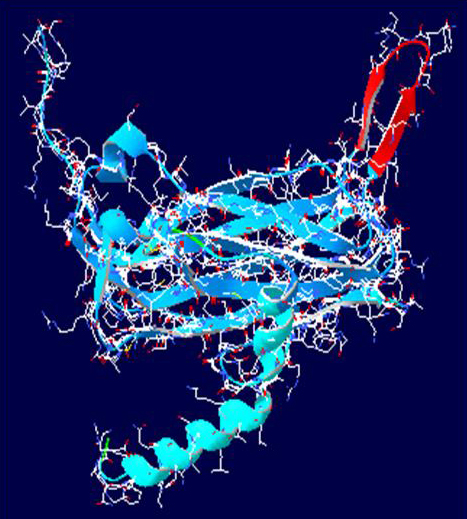
Al: Watching how singles of various standardized rated levels of attractiveness, among a particular sub-culture, interact over the course of a night at a bar. The conversations, the pairings, and who leaves with whom. If you quantify it, basically you get a hierarchical choice tree. If you rate attractiveness on a level of one to ten, you have a base-ten selection algorithm.

Adam: So you expect people to believe you pretty much make money off Google News?

Al: We don't make money off the news--we make money of the fact of the social existence of news. The same "fact" of people publishing and reading and linking to news is the same fact of buying and selling on the market. That's what makes us money. The market isn't a free market, a state market, an investment market, or any of that. It's just a market--a series of relationships. People buy and sell things as part of society, and what we do is just the mathematical extension. You don't have to believe anything anymore, but regardless of what you do, people will make decisions, and either succeed, or not.

Adam: Anything algorithms based on Twitter?

Al: We tried to model Twitter Trends and re-tweets via the API firehose, but the data just wasn't very interesting. Mostly second-order algorithms. The key is finding something that is complicated enough that it makes a pattern that isn't inherently obvious. Then, you can match it to market data, and find things that improve upon just straight guessing, or market models.

Adam: Any plans for the future with this theory? Or just keep at it?

Al: I'll just keep making money, I guess. It's too bad that we put so much capital into, basically, a mathematics exercise. We can't really apply this to anything else. You can get 35% over market with trading, but what's the point of getting 35% over, say, human movement at a rock concert, or 35% over random chemical reactions? There's only a payoff for beating randomness in the financial markets.

5/20/2010

The Harsh Real Estate Market of Creativity

Like most good ideas, someone has done it before.

Just read about this today. Looks like they did a version back in 2008.


This artwork, in the realm of architecture and performance, starts as a massive tower created from lashed together bamboo poles and brings into space representations of complexity and chaos. At its pinnacle, the continually evolving architecture being built from within (no outside scaffolding or support) will cantilever out as far as the bamboo poles network allows, and then will bridge down to the floor.


Theirs moves, I guess. And it is meant to have platforms and walkways, more like a scaffold, where as my tube structure was more to block off space, rather than support movement.

I also like how their piece is justified by the usual artist bullshit, where as I justified mine as a cure for boredom, and a rejection of the super-ego's censorship of crazy/stupid sorta-creative ideas.

Big BambĂș is connotative of an autonomous, spontaneous, self-governing, disorganized network responding to itself to better navigate the environment. “It represents me- in that I am who I was, and, I am completely different than I was when I was a little boy.” Doug Starn writes.


Yeah, whatever. Rhizomes and shit. We've all read it on the internet somewhere before. How about you don't "direct a team of 8-13 rock climbers" in something "spontaneous and autonomous" on the roof of the MOMA, and just fill your fuckin' house with tubes, man? Am I right, or am I right?


Anyway, the good news is that the Salem Art Association is letting us (M and myself) fill an old department store with tubes, along with M's sewn cloth monster/plant constructions. I just placed an order for 5000 tubes. As @burnlab said, "That's a lot of hot glue." Yep.

They want us to write an artist statement too. I'm looking forward to it, mostly because I hate artists statements. Rejecting the urge to do something overly sarcastic, about how our structure represents "my authoritarian, oligarchical, well-planned, dogmatic, fascist childhood". THIS IS NOT ART: THIS IS A BUREAUCRATIC DEPARTMENT OF MORAL IMPERATIVES. No. Maybe micro-fiction is the key?

We start construction today. We'll have assistants as well, supposedly. Maybe I'll quote them when their not expecting it, swearing as tubes fall on their heads, and use this as the artist statement. I plan on temporarily unionizing them, at the very least. :)

More info on the opening when we get closer.

Dream Description

Sometimes a dream doesn't seem quite as amazing once you've had a day to think about it, but my dream of the night before last still had some interesting features. Let me run it down for you.

I was at the brand-new "Museum of Cultural Perception" in a major East Coast city. The museum was a lot like a science museum--lots of hands-on exhibits, not meant to demonstrate the bias of cultural perceptions, so much as encourage them. Small myths about sub-cultures, the environment, etc.

The museum culminated around a central hall, with a large domed ceiling, not unlike the Pantheon in Rome. In the center of the hall, there was a massive bonfire burning, with flames lapping the ceiling, and going up through a hole (like the Pantheon). Into this bonfire, the museum goers were throwing the bodies of various mammals, mostly dead or dying. I saw a father encouraging his two children to lift a dead seal carcass to throw into the fire.

I left the museum, and outside was a giant truck fashioned into a Slurpie machine on wheels, with big hoses through which they were dispensing free Slurpie, in some horrible promotional red-green color. The operators were wearing space suits with domed helmets, and were having trouble operating the hoses.

I walked down the block with a friend, and we heard loud explosions, and turned around to see the museum blowing up, in various small blasts of flame and debris, probably twenty or so small localized blasts from all over the facade of the museum. Then I remembered we had left two friends behind in the building, who had wanted to see one last exhibit. We were going to go back to look for them, but before we did, I sent several text messages from my phone to tell anyone who heard about the bombing (because it was definitely a bombing, in my dream-mind) that I was okay.

And, scene.

CPSC Micro-fiction #5


CPSC Notices 5/20/2010

Walmart Recalls General Electric® Coffee Makers Due to Fire Hazard - The coffee maker can overheat, posing fire and burn hazards to consumers. Walmart has received 83 reports of overheating, smoking, melting, burning and fire, including three reports of minor burn injuries to consumer’s hands, feet and torso. Reports of property damage include a significant kitchen fire and damage to countertops, cabinets and a wall.

Target Recalls Storage Trunks Due to Strangulation Hazard - The lid of the trunk can drop suddenly when released, posing a strangulation hazard to small children opening or reaching into the trunks. CPSC has received two reports of injuries that occurred when the storage trunks’ lids suddenly closed on children, including one report of an 18-month-old girl who reportedly suffered brain damage when the trunk’s lid came down on the back of her neck and pinned her throat against the rim of the trunk.

Micro-fiction 5/20/2010

He made the coffee. He always does. He's so attuned to the vibrations coming through the grinder that he can feel the precise moment when the beans whirring through the blade are the optimal size, when the particulate matter is in the exact concentration of fragment, grains, and dust to best percolate through the filter. Something like that.
He poured the water into the reservoir, pushed the button, black on stainless steel. Then we sat at the kitchen table and didn't look at each other. We looked at the wicker trunk, under the window, the rays of sunlight highlighting the dark gaps between the weave.
"I'm sorry," I finally said. He didn't say anything. The coffee pot clicked, and gurgled. He never says anything. This is my vibration.
"We never should have opened it. We knew, and we did it anyway."
He folded his hands on the table and sighed, but imperceptibly, so I wouldn't see.
"I'll get rid of the trunk. It's all we can do now. It'll be gone by the time you come home."
The coffee was finished. He stood up, and reached for the mugs.
"I never would have thought... inside there..." I started, but couldn't finish.
He handed me a cup. "Be careful. It's hot," he told me.
We both sat quietly, watching the steam rise in the morning sun.

(I'm resisting the urge to provide commentary on these, to explain my motivations for the fiction based on the CPSC notices. The urge is made more intense by the fact that often there are real deaths, injuries, and damage associated with the recalls. I feel I need to phrase the fiction as a response to this distruction, to ensure my literary action is adequate. But of course, this violates the principle of micro-fiction, skirting the "rules", as it were. Anyway, this "need to speak as action" dynamic was in my mind when I wrote this one, and perhaps that says it better than anything.)

For information about this series, please see the introductory post.

5/18/2010

CPSC Micro-fiction #4


CPSC Notices 5/17/10

Mall of America Recalls Plush Toy Due to Choking Hazard - Young children can remove and ingest the squirrel's nose, which poses a choking hazard. No injuries reported.

Children's Deaths Prompt Recall of Toy Dart Gun Sets Sold Exclusively at Family Dollar Stores - If a child places the soft, pliable plastic toy dart in his/her mouth, the toy can be inhaled into the throat and prevent the child from breathing. CPSC and Family Dollar have received reports of two asphyxiation deaths involving a 9-year-old boy in Chicago, Ill. and a 10-year-old boy in Milwaukee, Wis.

Micro-fiction 5/17/10

"It's no crime," she said, first time she kissed me.
First time we stuck up that man on the avenue for cash, it was.
Don't matter where it starts, matters where it goes.
Where we were now, I don't know, but I'm not letting her hold me back from where I'm going.
"No more of that Dollar Store shit," I speak to her purple top, cinched tight in the middle how she wore it, always trying to change my mind. "I'm gonna knock off the Mall of America."
"I know," Susan looks at her bare feet. "And that's why I called the cops. You won't make it. They'll kill you."
I raise my Gordy Auto Fire 238, and pull back to cycle the first of eight bright red shells into the chamber.
She has a single tear running down the scar across her nose. "Sarah, I love you," she whispers.
"Love is a crime, " I say.

(The first actual injuries we've covered in this series, and two deaths to boot. Two deaths from a toy gun deserve some memorializing hard-boiled micro-fiction. Yes? No? What's appropriate? More toy guns?)

For information about this series, please see the introductory post.

5/17/2010

Two New Short Stories

...are on Brute Press.

Go. Read.

I won't say anything about them, except I was inspired to finally release these to the world by the Supreme Court upholding the indefinite detention of prisoners deemed "sexually dangerous". This obviously means rapists and pedaphiles, but despite these real criminals being dangerous, the court opinion still uses the oblique phrase "sexually dangerous". Dangerous via sexuality? Dangerous to sexuality? Exceptionally dangerous in a sexual way? Or dangerous because their crimes are linked to irrepressible sexual urge? The Supreme Court doesn't make a distinction.

This country is no stranger to locking up "sexually dangerous" people for any of these interpretations of the phrase. Now they can do it beyond a court of law, because folks, the danger here, is of a "sexual" nature.

So in honor of being un-concretely "sexually dangerous", I give these stories (and especially one of them) to the world. Nothing that hasn't been written about before. Maybe nothing you haven't done before. Two stories you haven't read before.

Thinking of the children,

Adam

Technological Metastasization

CELL PHONES CAUSE CANCER! Or not. Or maybe.

10 Year Cell Phone/Cancer study is inconclusive.

The interesting thing about this is not whether or not cell phones are putting the daemon-seed in your dome-piece, the interesting thing is that it takes TEN YEARS to get an inconclusive study.

What if there was some amazing new piece of technology that just happened to be latently deadly? What if the new retina-control i-EYE-Pads cause measurable blindness over, say, fifteen years of use? That's fifteen years of an amazingly influential piece of technology burrowing into our culture, economy, and our-very-structure-of-language, before we realize we are all going to be blind in another five? Technology moves at such a fast pace, we could kill ourselves off with a hype new gizmo before we can even diagnose ourselves.

And where the hell do you find a control group for this sort of study, anyway? Where do you find a measurable slice of humanity that doesn't use cell phones or isn't around cell phone use for a significant amount of years? Not the third world. The higher Andes? Monks in Tibet? People who have lifestyles and nutrition and genetics totally different from us? Is such a study even possible?

Or is technology so enmeshed into our lives, that it is not even separable from our body systems? Is this like, wondering if having blonde hair makes you live longer, but more like wondering if walking upright makes you live longer? If consciousness drives you crazy? How can we tell if this evolutionary mutation is a good one, or a bad one? Or is there no way to tell?

Can we not predict our health, if we don't even know what product Apple is going to release within a year? What happens to our deductive modeling of our future based on empirical evidence? What happens to science, as progress? Is science just a symbol of our own mutation? Is science a new virus, introducing some unimaginable majority of our current DNA, and therefore, distorting our destiny-as-species based on such anti-progress economics like infection and global pandemics, rather than the scientific method ?

Hari Seldon, where are you?

5/16/2010

Interface Me With Speed Please

So, with the ongoing obvious caveat that any sort of blogging on gadgets or technology is probably a waste of your time and no doubt conceitedly wrong-headed if not erroneous on its face...

I've been thinking some more about portable computing interfaces. Nerd alert.

SO, basically, the deal is that I am, like, really excited for the Chrome OS. The more I use Chrome as a browser, the more I realize how superior it is to other browsers simply for that RUSH of SPEED like gunning a V8 on a stretch of western highway, that even the smallest hint of acceleration in this velocity-twisted information economy is like a drug after a couple days of being off the stuff. And accordingly, I'm using more and more web apps. Google Docs? Loads and saves faster than a text editor. Gmail? FUCK Outlook. Never again. Switching between seven windows, fifteen tabs, faster than opening a new Windows Explorer window? Put it all online. I don't care. I'll do anything for that RAW, that FAST, that DATA-RUSH interface high that is instant micro-multi-tasking.

So, the iPad. The future of computing, maybe? According to the media? According to people who like shiny things? I had a new idea about this.

The iPad is the bridge. Many gripes about the possibility of Chrome OS sucking involve the potential lack of native applications. I have no idea if this is true or not, but, let's look at the iPhone OS.

Of the 50 apps I have on my iPhone, 30 of them would have no function if not connected to the network. Of the other 20, 12 are straight-up games, and then 5 more are basically "entertainment related" (a simple program without the need to save much data or interface with other apps). There are 3 stand-alone apps on my iPhone that I have downloaded, that improve the function of my mini-computer without an Internet connection.

Now, if Apple let you really alter the structure of their mini-computers, I might have some more utilities, some need to save data to the device itself. But they have already made it, for almost all intents and purposes, a Network-OS. And we've learned to love it. In fact, our use of the internet as an interface has shifted to take advantage of this relatively light-weight OS, utilizing networks rather than storage space, the cloud rather than OS, html and scripting rather than registry and resources.

Now for the second big part of the iPhone OS: multi-touch. Also, changed our interface to data. I find it absolutely incomprehensible that I can hand an e-coupon pulled up on my iPhone screen to any store clerk in America, and they will pinch and flick as naturally as if they were opening a paper envelope. Have an iPhone? Look at the way you turn the pages of a book. It's a little different now, isn't it?

This was what spurned this thought: this week I was talking to an IT tech in my work's new building. He was using a Fujitsu tablet PC, running Windows 7. So he says, this is the only tablet PC on the market that is multi-touch capable. He had bumped it up with 8gigs of RAM, SSD, etc (though bear in mind that in all these anecdotal examples I'm about to give, its really the SSD making the difference). He showed it to me--pretty slick. Boots from cold in less than 10 seconds. Loads programs as fast as you can click (literally, I watched him do it). Scrolls Microsoft's Earth mapping program, pinch, flick, all that, beautifully. Not like "other" multi-touch phones, that don't quite have that iPhone zip, but exactly the same.

Now the interesting part, is that he says it is best on Microsoft programs. Why? Because Microsoft has designed Windows 7 for multi-touch. I asked him what other companies have multi-touch capable software. No one. Because this is the only tablet PC with multi-touch (I think HP has that media wide-screen desktop thing, don't they? That's a custom, light-weight OS though, I think). He said he uses Explorer as a browser (I know, right?) because it's so seamless. Because it is designed for the interface. Everything else just acts like his finger is a mouse.

So, what I realized is not that any particular OS is going to be the next-new-whatever, but that I continue to see evidence in furtherance of the thesis that it is not any particular functionality that is really driving the usefulness of technology, but the seamlessness of the interface. The seamlessness is the SPEED by which we can interface our data. The quick response of the steering wheel that makes us think we are driving a high performance sports car, even if we are not. We want to feel the pull of the acceleration on our loins, see the speeding white lines of our data as we open and close it at will, flicking it around the roadway. The deep, psychical pull of the modern obsession with speed and acceleration is too deep rooted for us to be post-speed. Control is just too sexy.

iPhone OS taught us to love speed again. It taught us that as long as we're moving fast, we're interfacing our data better. And for the most part, this seems to be correct.

Now, if the Chrome browser is any indication, Chrome OS could be our flying car. We're okay with interfacing all data to the network. We'll adapt for the speed of it. I have no idea if Chrome OS is going to be multi-touch capable or not, but I can tell you that I'm sure developing multi-touch for a OS based on a browser is a lot easier than for Windows 7 and all Microsoft software. Firefox has multi-touch. Does the Chrome browser? I forgot to ask my new IT friend. But how much of a leap will that be?

And you know what the Chrome OS will definitely have that the iPhone OS will not? Moveable walls. It's going to be open-source, or at least open-enough that you can run say, a light-weight Ubuntu partition for all your old-school, mouse-click native apps and games, hard-save data, and private-private-private stuff, and then Chrome OS for your network interface. My IT friend had a couple virtual OS's on his souped-up Fujitsu. Know how long it took him to boot a virtual XP OS? Less than a second. Ubuntu? Less than that.

iPhone OS has made a lot, a lot of money off of its closed nature, because it pulled ahead. It was the innovator, and as such, was showered with gold. But apart from a high-design drink coaster, what is it they are really introducing? Something that they cannot hold by themselves forever. It's only a matter of time before someone else can replicate it, and they will replicate it open-source (whether its Google or not, simply to highlight their competition with Apple) and it will be cheap and fast and easy and will go onto any netbook you can slap a multi-touch screen on. People will buy Apple, because Apple makes very nice coasters. But their lock on the interface can't continue for ever. Nobody can restrain the human impulse for interface speed.

So, as sure as I can be without it actually existing yet, I'm super primed to buy a multi-touch mini tablet as soon as Chrome OS is actually an actually thing.

Next week: back to your regularly scheduled predictions and condemnations about the death of god, the re-birth of sex, anti-capitalist economics, and drug-addled anarchistic metaphysics.