Trains
A) the body
 Gone are the days of the Super Chief.
The train is in decline, still. Less freight is carried by rail in America. Overtures are made in homage to the train. Trains get speeches, but not new lines, not new passengers.
B) the symbol
It was the symbol of modernism, of the industrial output of Nations, of high speed, of raw power. It was the national might, the national dream. It was America, done up in steel, traveling across its own high-strength flesh grooves carved into the width of a continent.
Now the train is a symbol of socialism. It is the lurching, dying giant of the State. Railroads are subsidized, marking the awkward, geriatric point between lack of State-attention and full privatization. The point between decline, and actual death. Super Chief meant many things, but Amtrak means a joke. A national joke. A Washington joke. It is the failure of socialism, a past age, an idealistic modernism, belonging firmly in the alternate history of Deco zeppelin docking collars on the tops of skyscrapers. Trains have gone the way of World Wars. Of ocean liners, and big red rockets. It was a product of our technological age's teenage exuberance, and youthful idealism. We leave the trains now for the other countries of the world, where idealism is more akin to their stage of development, that is to say, behind the intelligent, older, more mature and advanced-of-ego-age, us. The Chinese might have high speed rail, and perhaps the Euro-rail network is nice for tourists, and the Japanese might love their crowded trains. But Americans will travel by other means.
Cars
A) the body
 A car crash used to be a perversely beautiful thing.
Everyone was buying cars. Big metal things, leather seats, lots of gas, even more road, radios installed, rock and roll invented and recorded and broadcast, it sounds good lo-fi, lots of treble, the engine takes care of the bass, drinking and driving was not always illegal.
People still buy cars, but the brands are diminished, safety records are tarnished, the price of gas is up, and hydrocarbons are foreign. The roads are broken, the highway design is as ancient as Eisenhower, the clover-leaf is from the age of the bomber gap.
B) the symbol
The car was the way in which we killed ourselves. We loaded it up with friends, we loaded it up with bullets, its metal was the crisp black steel of a hand-gun, the American gun, the gun that tamed the West, the gun with which we protect our homes. We loaded it up with gas, we got loaded ourselves, we got behind the wheel, we got it out on the road. We pulled the trigger, we pushed the petal, we pulled it back into the lane, we pointed the hood ornament West like the reticle on a gun sight.
But cars don't have hood ornaments anymore. We still die behind the wheel, perhaps more than ever. But it's no longer the subject of our rock and roll. The act of transportation is no longer the goal--now the goal is simply the destination. Our music is about where we are driving to get to, not the act of driving there. We get angry at the costs, and the time involved. The human costs, the environmental costs, the economic costs. What was the back bone of our industrial output is now our liability. The subject of the second, second amendment--the American right to own an automobile--is killing itself off. Handguns are better made than they ever were, but cars are prohibitively expensive to buy, poor in quality, unsafe to drive, and expensive to fill with fuel. If only it was the government, keeping us down with their seat belt laws and recalls, or restricting the places we can drive, or refusing to fix the roads. If only... but more and more, there is just little reason to drive. Where would we go? Into snarls of traffic? How many times can you drive to and from work? It is becoming more macho to drive a compact car than to obtusely keep filling that truck with gas.
We are no longer a country on the edge. We are no longer at the frontier, racing engines against fate and time and space. Our egos are bruised, perhaps, but the car just wasn't taking us to the places it used to take us. We're no longer bigger because of our cars. We may yet brandish that weapon, and clutch it in our cold, dead fingers, but we are starting to realize we are in the dark. No one gets rid of their guns--more likely, they just forget where they kept them.
The neurotic drive to express the fact of death through our machines, through our tools, and enact our ego-preserving force upon our environment is perhaps not the most sustainable of psychological traits, but it is only a neurosis. It is a potentially harmful pathway of mental power, but a pathway back to ourselves. We worked through our aggressions by impacting the asphalt, hard. Life is nothing if not self-destruction, a constant progress towards death.
But now, once again, we are beginning to travel by a different route.
Planes
a) the body
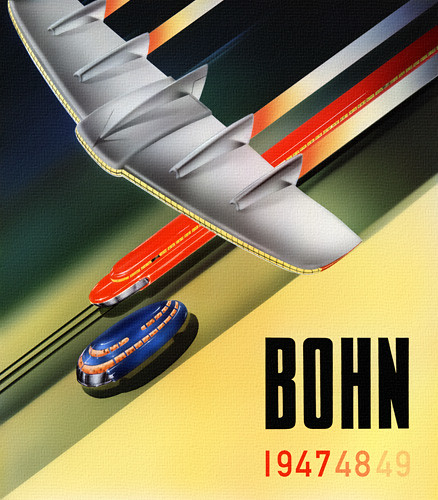 Suicide is a turning of the future against ourselves.
Airplanes, or alternatively, aeroplanes, were the future. Heavier than air flight was the impossible dream--space flight almost seems tantamount to leaving the ground in comparison. It's only faster, higher, and with a thicker skin. More money, that's all. But airplanes globalized the world. They crossed the continent again, after the train. But they also crossed the water, and then the ocean, and then time zones. What way better presents the fact of a round globe to any particular consciousness, other than to mess with the Circadian rhythm? The very internal sense by which we understand light and dark was pulled back and forth across the globe like a curtain, introducing a new insomnia into our modern lives.
Or so it was, in modern times. Now things are... different. We have receded from this magic of space and time. Supersonic flight is now barely a dream, in the same category as walking on the moon. It is a relic of a different future, it is a future of our past, and accordingly, it is the past and future of our present. It is one of many dreams. Our dreams are revealed as only dreams. Air travel is more expensive. Airlines are less profitable. Flight is slow, it is the height of bureaucracy, of customer frustration, of the infringement of personal liberty. There is more freedom now on the bus.
And also, so it seems, flying is more dangerous.
b) the symbol
Once, it was car bombings. A vehicle, something we see every day, packed with explosives and parked next to a target. But like our personal transportation, the symbol has moved on. How does the enemy of society attack in this day and age? From the air. The futuristic airliner passing silently and quickly overhead is now an angel of death, and those who have ill intent seek to cause them to rain down upon us, like clouds of fire, like curses, like biblical plagues. In the promise, now lies danger and potential death.
The airlines and airports are now places of suspicion, where one fears to tread. And yet we still have to go, because there is no other way. We have to get there, and so we have to face our fears. The fear, of our future coming to kill us.
It is not simply callus to refer to acts of terrorism as symbols. Because, as acts of terrorism, they are symbols. If one wanted to kill, one plots a murder, an assassination. There is no need for such spectacle. Even for more supremely violent acts against society and people and places, there are more efficient ways. A car bomb, a train bomb, even a misdirected bus has a greater damage capacity. These targets are wide in the open, and could never be fully secured. And yet, terrorists still lust after plane travel. There is no better spectacle, and no more powerful symbol.
The train represented the industrial muscle of nations, but nationhood is passe. The car was once the weapon of the people, which we turned against ourselves. The plane is an inefficient weapon, but one which we turn against others, one which strikes against the globe. In our modern society, in whatever age that it is, the airplane is a symbol--not of self-destructive ego expression, but of our wish for each other's death. It is a homocidal symbol.
This is no longer a neurosis, but a psychosis. Humans have dreamed for millennia of flight, and finally even a child can learn to pilot a plane. But the skill of flying is now a security risk, because those with the power to fly, also have the power to kill. Our dream is a social liability, a hazard, and a threat. Our willful conquering of the air is now a violent ideation, and so it seems, it can lash out "at any time".
We are no longer a country on the edge. We are no longer at the frontier, racing engines against fate and time and space. Our egos are bruised, perhaps, but the car just wasn't taking us to the places it used to take us. We're no longer bigger because of our cars. We may yet brandish that weapon, and clutch it in our cold, dead fingers, but we are starting to realize we are in the dark. No one gets rid of their guns--more likely, they just forget where they kept them.
The neurotic drive to express the fact of death through our machines, through our tools, and enact our ego-preserving force upon our environment is perhaps not the most sustainable of psychological traits, but it is only a neurosis. It is a potentially harmful pathway of mental power, but a pathway back to ourselves. We worked through our aggressions by impacting the asphalt, hard. Life is nothing if not self-destruction, a constant progress towards death.
But now, once again, we are beginning to travel by a different route.
Planes
a) the body
Suicide is a turning of the future against ourselves.Airplanes, or alternatively, aeroplanes, were the future. Heavier than air flight was the impossible dream--space flight almost seems tantamount to leaving the ground in comparison. It's only faster, higher, and with a thicker skin. More money, that's all. But airplanes globalized the world. They crossed the continent again, after the train. But they also crossed the water, and then the ocean, and then time zones. What way better presents the fact of a round globe to any particular consciousness, other than to mess with the Circadian rhythm? The very internal sense by which we understand light and dark was pulled back and forth across the globe like a curtain, introducing a new insomnia into our modern lives.
Or so it was, in modern times. Now things are... different. We have receded from this magic of space and time. Supersonic flight is now barely a dream, in the same category as walking on the moon. It is a relic of a different future, it is a future of our past, and accordingly, it is the past and future of our present. It is one of many dreams. Our dreams are revealed as only dreams. Air travel is more expensive. Airlines are less profitable. Flight is slow, it is the height of bureaucracy, of customer frustration, of the infringement of personal liberty. There is more freedom now on the bus.
And also, so it seems, flying is more dangerous.
b) the symbol
Once, it was car bombings. A vehicle, something we see every day, packed with explosives and parked next to a target. But like our personal transportation, the symbol has moved on. How does the enemy of society attack in this day and age? From the air. The futuristic airliner passing silently and quickly overhead is now an angel of death, and those who have ill intent seek to cause them to rain down upon us, like clouds of fire, like curses, like biblical plagues. In the promise, now lies danger and potential death.
The airlines and airports are now places of suspicion, where one fears to tread. And yet we still have to go, because there is no other way. We have to get there, and so we have to face our fears. The fear, of our future coming to kill us.
It is not simply callus to refer to acts of terrorism as symbols. Because, as acts of terrorism, they are symbols. If one wanted to kill, one plots a murder, an assassination. There is no need for such spectacle. Even for more supremely violent acts against society and people and places, there are more efficient ways. A car bomb, a train bomb, even a misdirected bus has a greater damage capacity. These targets are wide in the open, and could never be fully secured. And yet, terrorists still lust after plane travel. There is no better spectacle, and no more powerful symbol.
The train represented the industrial muscle of nations, but nationhood is passe. The car was once the weapon of the people, which we turned against ourselves. The plane is an inefficient weapon, but one which we turn against others, one which strikes against the globe. In our modern society, in whatever age that it is, the airplane is a symbol--not of self-destructive ego expression, but of our wish for each other's death. It is a homocidal symbol.
This is no longer a neurosis, but a psychosis. Humans have dreamed for millennia of flight, and finally even a child can learn to pilot a plane. But the skill of flying is now a security risk, because those with the power to fly, also have the power to kill. Our dream is a social liability, a hazard, and a threat. Our willful conquering of the air is now a violent ideation, and so it seems, it can lash out "at any time".
America has undergone a psychotic break with reality. Certainly, it is a fact that violence is one of the most eternal laws of humanity. That is fact. But the break with reality lies in the notion that a single, solitary vision of violence will do anything to sway the course of humanity. Or even a string of violent visions, symbols, and acts. We are surrounded by violence everywhere--in our countless other symbols, and in our physical bodies, themselves images of violence, both the capacity for, and the vulnerability to violence we all encompass as human bodies. Our relationships with space and time are constituted within the physical tolerances of violence. Our transportational infrastructure, as the set regimes of physical motion through space and time for our society, are themselves constituted within the physical tolerances of violence. We normally call these "safety", or "comfort", "keeping to a schedule", or "physical possibility". It is the same thing that has guided the rest of humanity through the journey of history. Physical possibility, and the pursuit of safety and comfort. If we have a destiny to manifest, it is letting our bodies achieve what they can, how they can. It is a lot of hard work, pain, and most of the time, results that fail to meet our expectations.
The break is the deviation from this historical path, to think that we can achieve all that we think. To believe that the future we once saw in trains, cars, or planes was anything more than a future we simply envisioned. To think that a future could ever become a present. There is only the present, and all the dreams, symbols, and acts that could ever occur within it.
Those who have experienced the psychotic break cannot understand why the present is not the future they have already envisioned. Why is America not what it's supposed to be? They do not understand why their dreams are not already reality. Reality is a stratification made from dreams, but in this way it is nothing but absolutely real--it is never wish fulfillment. Those who have experienced the break do not seek to express themselves in repair of their egos, to alter their own egos with actions and with objects, to better deal with the inconsistencies of reality. They seek to effect the same break on reality that reality has broken within them, to widen the gap by breaking the reality of others, and in doing so they seek to pick one particular symbol to represent the violence they feel, and thereby re-constitute the reality they have lost. They throw their entire lives into this symbol, and in return, expect a redemption of their lives in the act of violence.
But in the end, it's just another act of violence. It's just another passage from here to there--another physical spasm in a huge stratification of physical spasms. It is one more symbol in a massive dream-dimension society of symbols, and another confounding truth of human reality. It is not human work, it is human futility. And in this way, it's also our fate.
We haven't seen the last breath of our unified national transportation policy.
The break is the deviation from this historical path, to think that we can achieve all that we think. To believe that the future we once saw in trains, cars, or planes was anything more than a future we simply envisioned. To think that a future could ever become a present. There is only the present, and all the dreams, symbols, and acts that could ever occur within it.
Those who have experienced the psychotic break cannot understand why the present is not the future they have already envisioned. Why is America not what it's supposed to be? They do not understand why their dreams are not already reality. Reality is a stratification made from dreams, but in this way it is nothing but absolutely real--it is never wish fulfillment. Those who have experienced the break do not seek to express themselves in repair of their egos, to alter their own egos with actions and with objects, to better deal with the inconsistencies of reality. They seek to effect the same break on reality that reality has broken within them, to widen the gap by breaking the reality of others, and in doing so they seek to pick one particular symbol to represent the violence they feel, and thereby re-constitute the reality they have lost. They throw their entire lives into this symbol, and in return, expect a redemption of their lives in the act of violence.
But in the end, it's just another act of violence. It's just another passage from here to there--another physical spasm in a huge stratification of physical spasms. It is one more symbol in a massive dream-dimension society of symbols, and another confounding truth of human reality. It is not human work, it is human futility. And in this way, it's also our fate.
We haven't seen the last breath of our unified national transportation policy.


